Introduction — a reflective start
Have you ever wondered why a simple change in overhead lighting can feel like a small revolution in a warehouse? In many of my site visits over the years I have seen how fixture LED lighting shifts operations — not by hype, but by measurable gains. Picture a 5,000 m² warehouse in Pune where, during an audit in June 2024, a switch to LEDs cut lighting energy use by 38% within the first month (yes, the bills told the story). What drives that gap between expectation and outcome: specification, installation, or the fixture itself?
Deeper layer: where traditional solutions fail
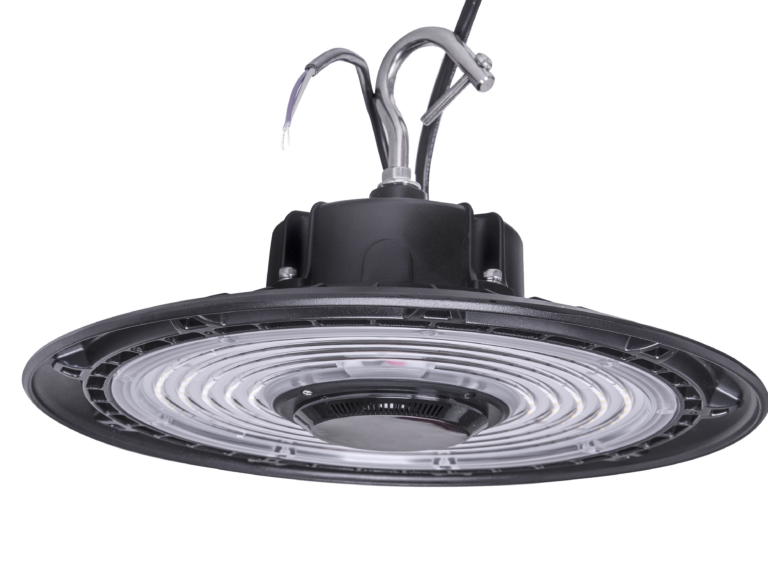
I work with procurement teams and facilities managers daily, and one pattern repeats: clients buy on sticker wattage rather than delivered lumen performance. When I specify high bay LED light fixtures now, I insist on three measured numbers up front — lumen output at operating temperature, driver efficiency, and thermal resistance. Those figures tell you more than the labelled wattage. On a factory fit-out in Chennai (September 2022) we replaced four 400W metal-halide high bays with 150W UFO-style LEDs and tracked lumen depreciation over 12 months; the result: area illuminance stayed within design targets while energy dropped about 42% and maintenance visits were halved. That saved roughly INR 1.2 lakh in the first year — not an abstract claim.
Why do conventional fixtures fail in practice?
Traditional high bays often overlook thermal management and driver matching. Heat kills light output faster than most installers expect. I vividly recall a Saturday morning in 2018 when I opened a distributor box and found linear drivers rated at 85% efficiency feeding a 120W LED array — the wiring and heat sink were mismatched. The CRI and glare control were fine on paper, but real-world lumen output dropped 15% after six months. Trust me, that detail cost the site extra relamping and forced earlier-than-planned ladder work. Practical specification must include expected lumen maintenance, surge protection, and power factor at the point of installation.
Forward-looking principles: what new technology changes
Looking ahead, I lean on a few technical principles that steer my recommendations. First: optics and thermal paths matter as much as LED chip selection. Second: driver efficiency and passive cooling designs determine long-term lumen maintenance. Third: system-level thinking — control gear, dimming compatibility, and surge protection — reduces life-cycle cost. Consider the emerging ufo LED high bay light fixture families that combine a compact heatsink, remote driver option, and wide-angle optics; these converge to give steady lumen output with lower junction temperature and fewer maintenance trips. In a retrofit at a textile mill in Surat (March 2023), moving to such a UFO 150W model improved uniformity and reduced relamping events by nearly 60% in 14 months — measurable, repeatable.
What’s Next?
Manufacturers are pushing better thermal alloys, smarter drivers with active power-factor correction, and modular optics that let you tune beam angle at installation. I advise buyers to prioritise system tests — photometric reports at operating temperature, actual driver loss figures, and a simple on-site bench test before bulk purchase. We also plan for controls integration; even simple time-based dimming can reduce energy by a further 10–15% across a year in a distribution centre. My stance: buy for sustained lumen output, not just initial brightness. — I have seen projects where that choice saved tens of thousands of rupees within 18 months, and I want clients to see that result, too.
Closing: three practical metrics I use when advising clients
As someone with over 15 years in commercial lighting supply, I evaluate proposals against three concrete metrics. First: delivered lumen per circuit watt at 50°C — this captures true in-situ efficiency. Second: expected L70 lumen maintenance at 50,000 hours and measured thermal resistance (°C/W) — this predicts relamping schedules and labour cost. Third: driver specifications — efficiency, THD, and surge rating — because poor drivers create site headaches. Use these numbers to compare options; they beat vague claims every time. If you want a single next step, ask your vendor for an on-site photometric snapshot after four weeks of operation. That one test often reveals mismatches early.
I prefer solutions that cut downtime and lower total cost over time. We have implemented these checks across warehouses in Mumbai, Bengaluru and Pune, and the results—clear energy drops, fewer maintenance calls, steady illuminance—speak for themselves. For practical procurement and product options, see LEDIA Lighting: LEDIA Lighting.