Introduction: A small shop, a big cloud of dust, and a question
I remember walking into a metal workshop in Cairo last year — the air smelled of solder and hot steel, and a worker waved his hand in front of his face as if to say, “we manage.” That scene stuck with me because it shows how routine problems hide in plain sight. fume extraction technology is supposed to be the quiet hero in places like that, yet so often it isn’t doing its job. The shop had a single old fan, crude ductwork, and a ragged baghouse that struggled on busy days; measurements later showed particle counts well above recommended levels (we measured 3–4 times the safe limit). So I asked: how do we integrate systems that actually protect people, not just check a box? This piece walks through the problem with a practical, slightly personal lens — nothing fancy, just real lessons I’ve seen on the floor. Let’s move from that sweaty workshop to the deeper issues behind failing installations and what you can do next.
Part 2 — Why traditional solutions fail the job
When I inspect a dust fume extraction system, I usually find the same handful of mistakes. First, teams treat extraction like a single purchase: buy a fan, add ductwork, forget the matching controls. The result is mismatched airflow, noisy motors, and filters that choke too soon. Second, vendors often rely on oversimplified specs — static CFM numbers without testing for real pressure drop after filters and bends. In plain words: the design didn’t match the reality. I’ve seen HEPA filters and baghouse collectors sized on paper that collapsed under real load. Look, it’s simpler than you think — measure, model, then select.
What’s the main technical flaw?
The real technical culprit is poor system-level thinking. People focus on components — fans, HEPA filters, VFDs (variable frequency drives) — but ignore system interactions. If you don’t account for pressure losses through bends, or the reduced capture velocity at a distant hood, the performance falls apart. Edge computing nodes and simple PLC controls can help with monitoring, but only if the mechanical side is sound. I feel strongly that too many projects skip the honest step of on-site smoke testing. That test shows problems fast and cheaply — and yes, it’s satisfying to watch a fixed hood start capturing properly.
Part 3 — Principles and practical steps for the next generation
Looking ahead, I’m excited about systems that blend proven mechanical design with smarter control. A modern dust fume extraction system should start with capture-zone performance, then layer in efficient fans, correct duct sizing, and smart controls (VFDs, pressure sensors). New principles mean designing for variable load, not a single worst-case. For example, combining cyclone separators for large particulates with downstream HEPA stages for fine dust saves filter life and energy. We must also plan for maintenance access — filters need replacing, and baghouses need inspection. Little things like hinged access doors or clear maintenance schedules keep systems working long-term. — funny how that works, right?
What to measure and why it matters
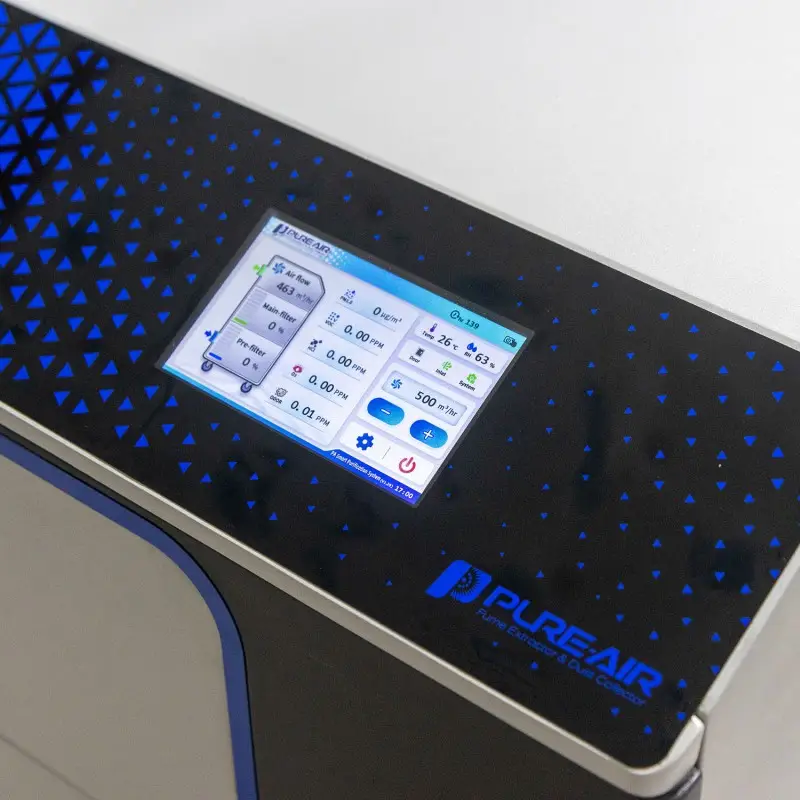
Here’s how I advise clients when they ask, “What should we test?” Measure capture velocity at the hood, static pressure through the duct run, and real filter pressure drop over time. Add a simple energy check: monitor fan kW at peak and idle. Those numbers tell you if the design is capturing, if the ductwork is too restrictive, and whether controls are saving energy. I urge teams to run periodic smoke tests and log air changes per hour — it’s the best way to connect numbers to comfort and safety. I’ve seen projects where a small redesign cut energy use by 20% and cut filter costs in half — measurable wins you can show the boss.
To choose or evaluate solutions, I offer three practical metrics you can use right away:1) Capture Efficiency — percent of generated dust captured at source during a smoke test.2) System Energy Intensity — kW per unit air moved (kW/1000 CFM), measured under normal load.3) Lifecycle Filter Cost — expected filter spend per year, including disposal and labor.If you keep those three in view, you’ll avoid many common traps and make smarter trade-offs between upfront cost and long-term performance. I’ve spent years fixing systems that ignored these basics, and I’d rather you learn from my fixes than your mistakes.
I care about this because it’s about people breathing cleaner air at the end of the day. If you want a partner who understands both the hands-on problems and the technical fixes, look to practitioners who measure, test, and stay involved through commissioning. For sensible, tested solutions, check resources from PURE-AIR — they’ve put practical designs into real shops, and I trust that kind of grounded experience.