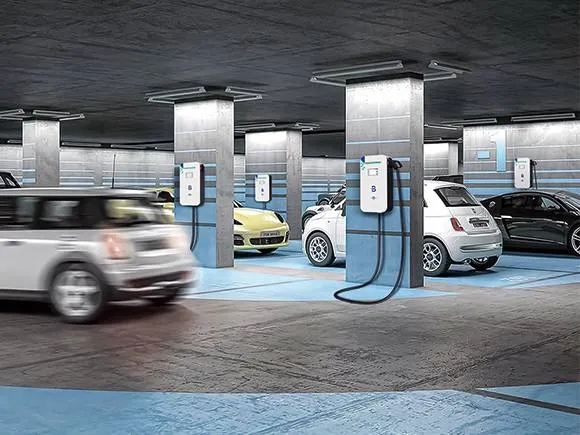
Dawn at the Forecourt: Choices in the Queue
It’s early, the forecourt lights hum, and a taxi rolls in on a whisper. The EV charging gas station kicks awake as vans, commuters, and night-shift nurses pull up, hoping for a quick top-up before the city shakes itself alive. Across Europe, peak-time dwell can creep past ten minutes, and some sites see usage spikes that overwhelm the lane layout. You can feel the pace of it in Dublin air—soft rain, bright screens, the hush of tyres—and still the question hangs: will the line move? We plan, but the day keeps slipping. Load balancing fights with coffee breaks; demand response nudges at the meter; drivers ask for clarity more than speed, truth be told. Here’s the rub: the same site can flow on Tuesday and clog on Friday. That’s not chance, that’s design (or the lack of it). So, what makes a smart forecourt sing while another stalls? And what can be fixed without ripping up the ground?

Let’s peel it back and see where the pressure lives.
Under the Canopy: The Hidden Frictions
What are we missing?
A gas station electric charger looks simple from the kerb, but the bottlenecks hide in small moments. Screens that glare in rain. Payment loops that bounce cards. Cable reach that forces awkward parking, then blocks the exit—sound familiar? Inside the cabinet, power converters and switchgear do their best, yet one slow stall drags a whole bay because the queue management is blind to real dwell, not just kWh. OCPP messages lag when the backhaul is thin, so faults linger. And if the site map treats EV bays like fuel pumps, the traffic knot will form at the throat. People don’t queue for electricity the same way they queue for diesel. Different pace. Different micro-moves.

Look, it’s simpler than you think. The pain grows where the system ignores three basics: time, trust, and flow. Time: chargers that don’t display live wait and predicted finish create churn. Trust: if uptime slips, drivers overstay “just in case,” which hurts throughput. Flow: without edge computing nodes to fuse payment, stall status, and lane signals, staff can’t steer cars, and drivers won’t self-sort. Add dynamic pricing without clear caps and you’ll spook casual users; keep it too flat and you starve turnover. Small, human fixes—clear canopy signage; angled bays for easy exit; a warm prompt to unplug—work best when the tech is tidy beneath.
From Queue to Flow: New Principles on the Forecourt
What’s Next
We can do better by making the grid feel closer than it is. Think modular cabinets with hot‑swap power modules, a battery buffer for peak shaving, and smart transformers that share load across lanes. Tie that to ISO 15118 Plug & Charge, and the handshake drops to seconds. With real-time controls, gas station EV charging can shift from “stall by stall” to “site as system.” Edge logic watches dwell patterns, predicts handoffs, and nudges drivers with gentle prompts—no bark, just good timing. It’s not magic, it’s new choreography: stall orchestration, adaptive queuing, and local fallbacks if the cloud blinks. When payment, parking, and power speak the same simple language, queues flatten—funny how that works, right?
Here’s the comparative bit. Old builds treat EV like another nozzle. New builds respect the different rhythm. The former leans on oversized transformers and hopes; the latter blends battery storage, fast fault isolation, and lane‑aware guidance. The result is steadier throughput, fewer stranded minutes, and calmer staff. We keep the lessons from before—good lighting, clear sightlines—and add live ETA boards, fair caps on dynamic pricing, and soft policies that reward courtesy. In short, we swap force for finesse. Summing up the path ahead: cut friction at the screen, share power with intent, and let the lane design do half the work. For choosing solutions, keep three measures close to heart: average wait per session, kWh throughput per stall-hour, and true uptime (faults cleared within minutes, not days). For those building toward that future, the craft is in the join between people and power—and that’s where partners like EVB keep the flow honest.