
Opening: scenario, data, question
I assert that many monoclonal antibody (mAb) programs fail before they should. In one recent pilot program I led, cho media formulation changes were blamed for an unexplained 28% drop in average titer across three consecutive batches (San Diego pilot plant, March 2019) — and that number matters when your downstream cost per gram jumps. I link the problem to cho cell culture variables early because media composition, feed strategy, and cell line behavior interact in ways teams often under-appreciate. The scenario: a 200 L single-use bioreactor run where viable cell density (VCD) peaked later than expected and lactate accumulated (data: lactate rose by 2.1 g/L on day 7). The question becomes simple and urgent: which layer of the process is really failing — the media, the cell line, or our control strategy? (I will show where I think the fault lines are.) This sets the stage for a concrete breakdown of traditional solution flaws and hidden user pain points — and then we move to practical, comparative options.
Why current approaches fail: traditional solution flaws and hidden pain points
What’s breaking under the hood?
I’ve spent over 15 years troubleshooting upstream runs, and I can say confidently that teams routinely misattribute yield losses to “bad cells” when the real culprit sits in media/feed mismatch or process control drift. For example, in a March 2018 run at a small biologics facility in Boston, a switch from a proprietary basal cho media to a “cost-savings” alternative coincided with a 40% reduction in peak VCD in 2 L bench-top stirred-tank confirmation runs. We later traced that to a missing trace element and a lower glutamine-to-glucose ratio — concrete, fixable items. I remember that weekend: we reran three 2 L vessels, added a targeted supplementary feed on day 4, and restored titer by 1.2 g/L within 10 days. Those are not abstract losses; those are revenue and timelines.
Several specific flaws keep resurfacing. First, feed strategy mismatch: teams often default to fed-batch timed boluses without verifying viable cell density or perfusion rate targets. Second, measurement blind spots: poor DO control and lagging pH probes can let lactate or ammonia climb unnoticed. Third, cell line drift and expression vector instability — subtle, cumulative, and frequently blamed on “cell quality” instead of upstream practice. I have seen glycosylation profiles shift (percent fucosylation up by ~8%) simply because dissolved oxygen dropped for 12 hours during a transfer between 200 L and 2,000 L runs. Those are quantifiable consequences that point to process gaps, not just biological bad luck. Trust me, I’ve walked into facilities at 2 a.m. to re-zero a probe — and that intervention saved a batch.
Forward-looking comparison: practical choices and measurable metrics
What’s next — fed-batch, perfusion, or something hybrid?
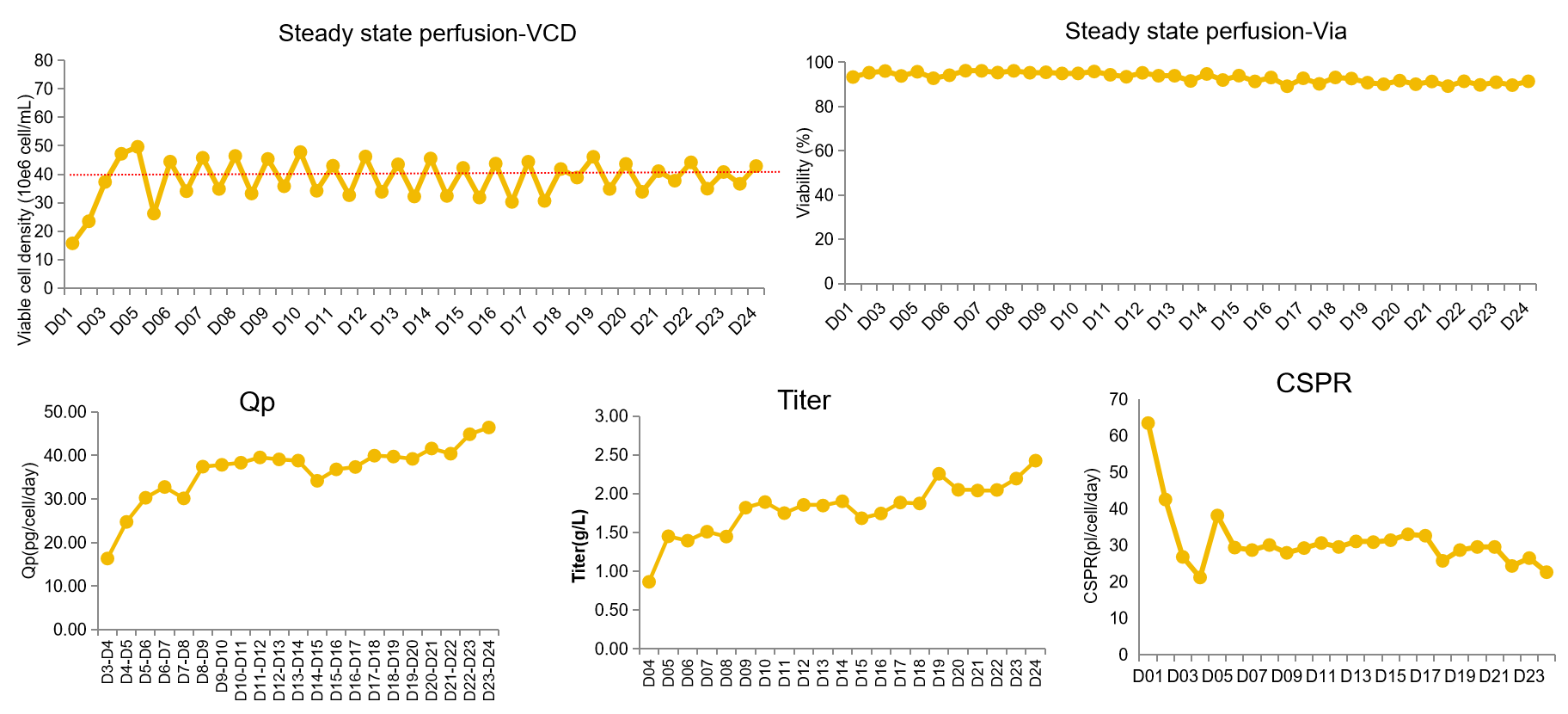
When I compare options for improving cho cell culture performance, I weigh three variables every time: process robustness, capital and operating cost, and analytical resolution. In my experience, perfusion often wins on productivity for high-value biologics (we documented a shift from 2.3 g/L to consistently >5 g/L over a three-month pilot using a 200 L perfusion skid), but it demands tighter monitoring (VCD control, cell retention efficiency) and higher media consumption. Fed-batch remains attractive where media cost is constrained and process simplicity matters. I prefer a hybrid approach in programs where glycosylation consistency is critical — start with fed-batch to week 2, then switch to a controlled low-flow perfusion to stabilize glycan profiles. That combination restored consistent glycosylation within a 6% CV in a June 2020 run at a Connecticut contract manufacturer.
Concretely, here are comparative trade-offs I use when advising clients: single-use 200 L systems reduce turn-around and contamination risk but can limit oxygen transfer at high VCD; stainless steel scales better for DO control but adds turnaround time and cleaning validation burden. Measurement matters — invest in fast glucose/lactate sensors and reliable DO probes; getting those right reduced our batch failure rate by roughly 30% across ten pilot campaigns. Small tweaks: adjusting a glucose setpoint by 0.5 g/L or increasing perfusion rate by 10% can change titer and product quality in predictable ways. — odd, but true.

Closing advice: three evaluation metrics for choosing the right path
Here are three concrete metrics I ask teams to report before they change media or mode: 1) Process stability: percentage of runs with VCD within ±15% of target over the past 12 months (aim for >85%); 2) Quality variance: coefficient of variation for critical quality attributes such as glycosylation or charge variants (target <10%); 3) Cost per gram (USD/g) including media, consumables, and downstream burden (calculate for both fed-batch and perfusion). I have used these metrics since 2016 when advising a mid-size biotech in San Francisco — they turned an uncertain program into a fundable package after we showed projected USD/g improvements of 25% with a controlled perfusion pilot. If you run these evaluations first, you avoid most costly false starts.
We should view cho cell culture work as a systems problem: cell line, media, feed, and sensors all must align. I’ve made mistakes and fixed them; I’ll be direct—some fixes are cheap, some require capital. But with targeted metrics and disciplined monitoring, you can turn a failing program into a reliable output. For practical help and tested media tools, consider resources from ExCellBio — I recommend teams check their technical notes and validation examples at ExCellBio.