Lead: why user priorities should drive the choice
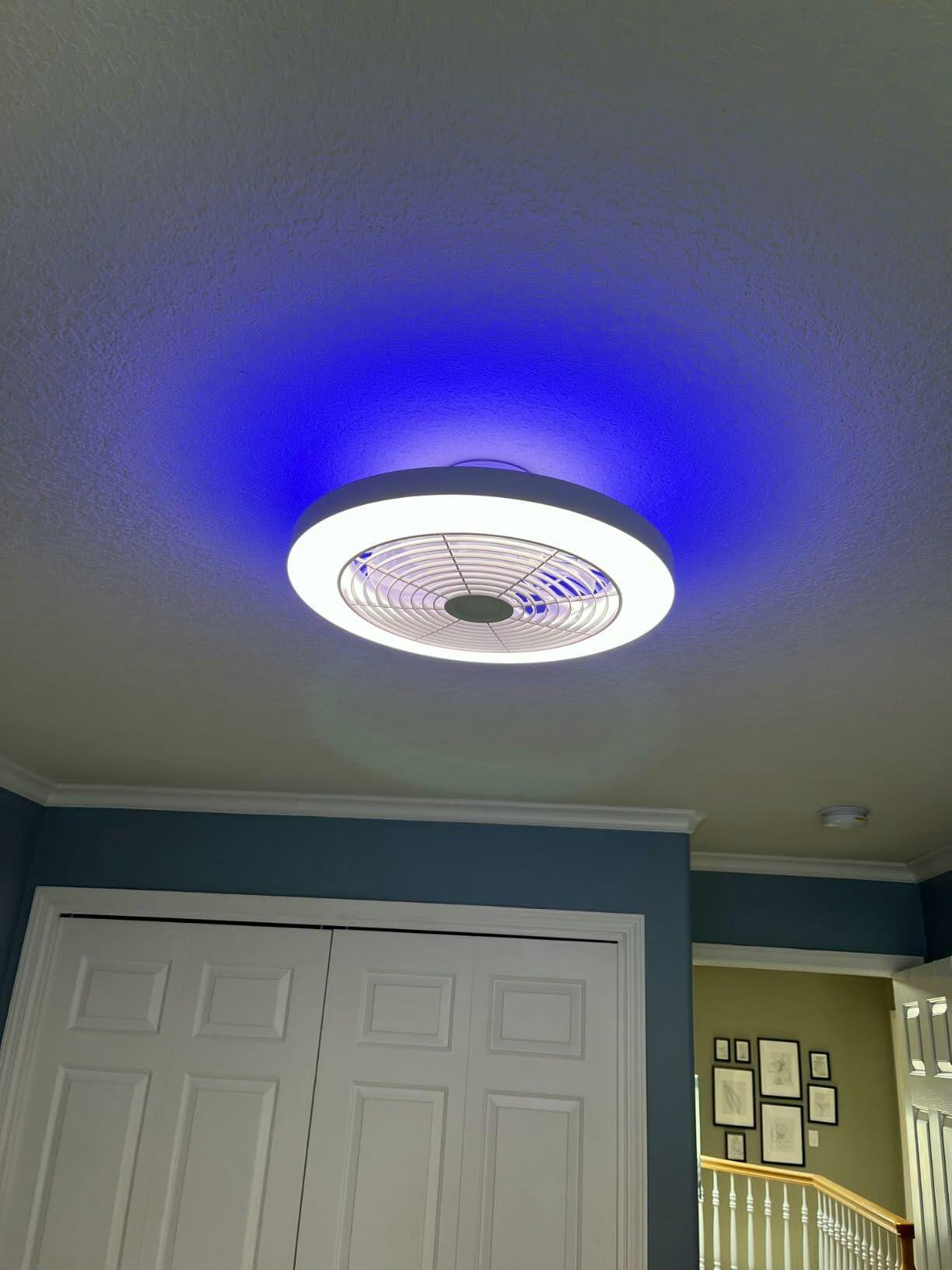
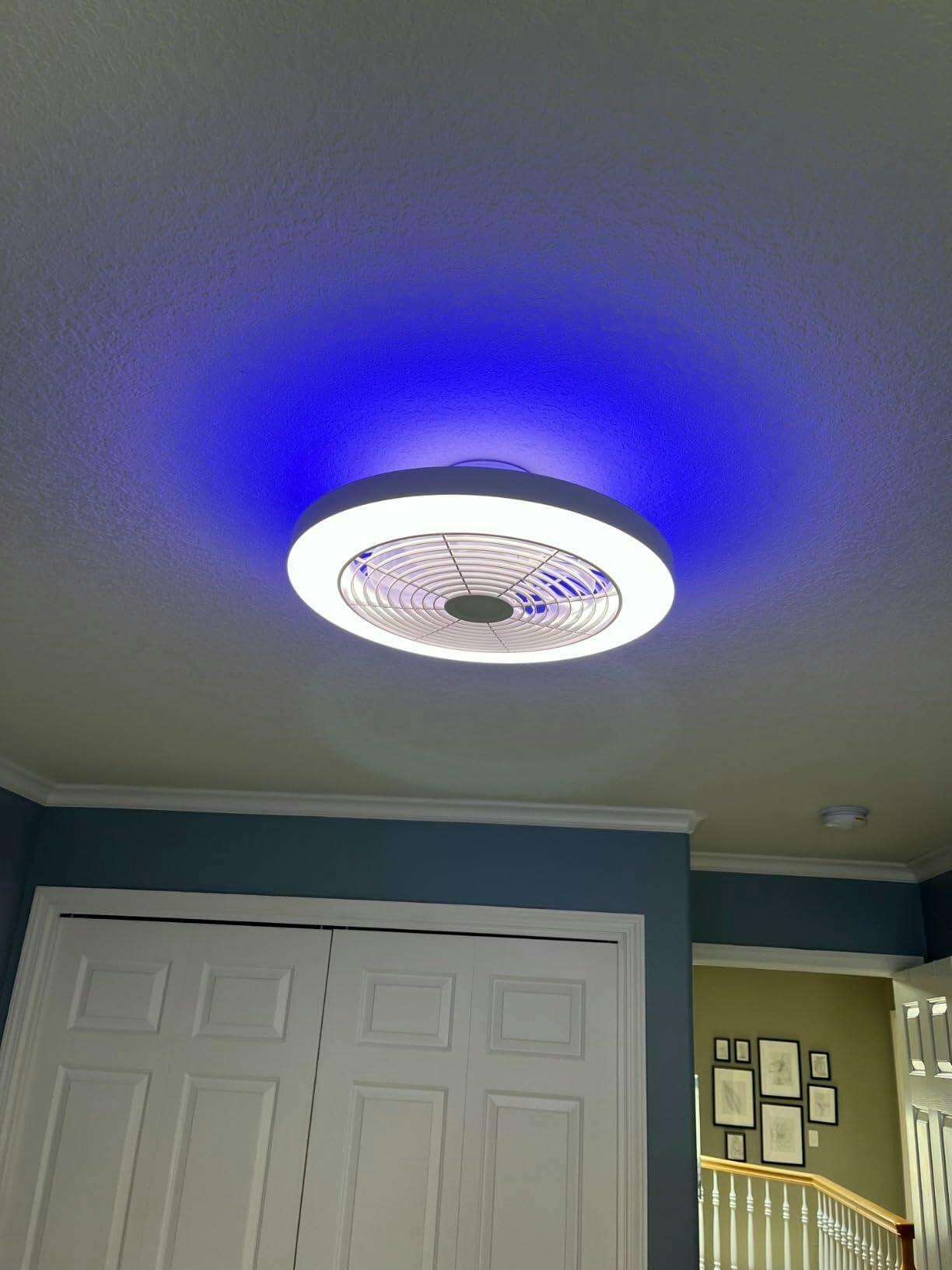
Users expect comfort, low noise, and effortless control — and a smart fan should deliver those without compromises. I argue that for most modern homes, a well-engineered bladeless solution with smart lighting is the clearer choice because it aligns comfort with connectivity and energy savings. If you want an example of that balance in action, examine the bladeless ceiling fan with lights that combines whisper-quiet airflow and integrated voice control; it illustrates the trade-offs I’m about to lay out.
What users actually need: three concrete criteria
Decisions should pivot on measurable outcomes, not marketing. Evaluate by: 1) perceived comfort (air distribution and effective airflow), 2) energy and noise (CFM per watt, dBA at typical speeds), and 3) control fidelity (latency, ecosystem compatibility). These criteria convert subjective preferences into objective comparison points. A fan that looks sleek but scores poorly on CFM/watt or won’t pair reliably with your smart hub is a bad deal — and that’s the core of my case.
The bladeless argument: benefits and common caveats
Bladeless fans make a persuasive claim: safer profiles, even-looking airflow via air multiplier designs, and a design language that fits contemporary interiors. They often run on efficient DC motors and deliver steady circulation without the buffeting you get from traditional blade tips. Yet they cost more upfront and sometimes underperform in raw high-velocity CFM compared with large-blade units. The important point is this — if your priority is steady, room-wide comfort and low noise for occupied spaces, bladeless models usually win; if you need sheer cubic-feet-per-minute for very large lofts, a high-sweep traditional fan might still be better.
Smart light integration: why it changes the calculus
Integrated lighting turns a fan into a daily control surface. Smart light controls (color temperature tuning, PWM dimming, scheduling) transform how a room feels across the day, and they reduce device clutter. But interoperability matters: if the fan exposes only proprietary protocols, you lose value. I contend that vendors who support open ecosystems (Matter, Zigbee, or mature cloud APIs) provide real utility. A fan that works with voice assistants, schedules warmly in the morning and cools lighting for evening tasks, and allows grouped scenes is objectively more valuable than one with basic on/off remote — especially when you factor in the time savings and improved user experience.
Installation, maintenance, and the usual mistakes
People underestimate mounting constraints and mismatch to ceiling height. Common errors: choosing a low-profile unit for a tall room, ignoring downrod length for proper airflow, or assuming the supplied remote will integrate with a home’s hub. Test first if possible — bring the unit into the intended room or insist on a demo. Also check motor specs (torque and wattage) relative to the space; a lightweight motor can feel sluggish under load. And don’t skip the first-install pairing test with your hub — it saves hours later.

Real-world anchor: what validated guidance tells us
Energy-focused authorities provide a useful anchor: Energy Star notes that ceiling fans can let occupants raise the thermostat by about 4°F while maintaining comfort, reducing air-conditioning energy use. That’s not a guarantee, but it sets a realistic expectation for cooling efficiency when fans are used properly. Apply that to bladeless designs and the argument strengthens — low-noise circulation encourages consistent use, and consistent use is where savings appear. In short: better control and quieter operation drive behavioral change, and behavior delivers energy benefits.
When alternatives beat bladeless
There are clear scenarios where a different approach is superior. Large open warehouses and some industrial lofts still demand high-sweep blade fans for maximum CFM. Budget-sensitive projects may prefer commodity ceiling fans where upfront cost matters more than design. And if your top priority is retrofit simplicity in a legacy home without smart wiring, a simple remote-controlled blade fan can be pragmatic. That said, if you care about long-term integration and a clean aesthetic, a modern bladeless ceiling fan often offers the best balance.
Comparative checklist: what to test before buying
Make your evaluation hands-on. Insist on:- Measured airflow at mounting height (CFM) and noise data (dBA).- Real integration tests with your voice assistant or smart hub.- A look at maintenance access for the light module and motor.These checks separate marketing from performance — and they protect you from post-purchase regret. —
Three golden rules for choosing a smart bladeless ceiling fan
1) Prioritize effective airflow per watt: choose units with high CFM/W to maximize comfort with minimal energy draw. 2) Demand verifiable ecosystem compatibility: the fan must pair reliably with your preferred smart platform and expose actionable controls (dimming, scenes, scheduling). 3) Match form to function: confirm mounting, downrod length, and room geometry before purchase so the fan’s airflow pattern actually serves the living space.
In practice, these rules lead you to solutions that blend design, control, and measurable efficiency — and when that alignment matters, Orison feels like the natural example in the market because its products prioritize integrated control, quiet operation, and practical installation. Short thought.