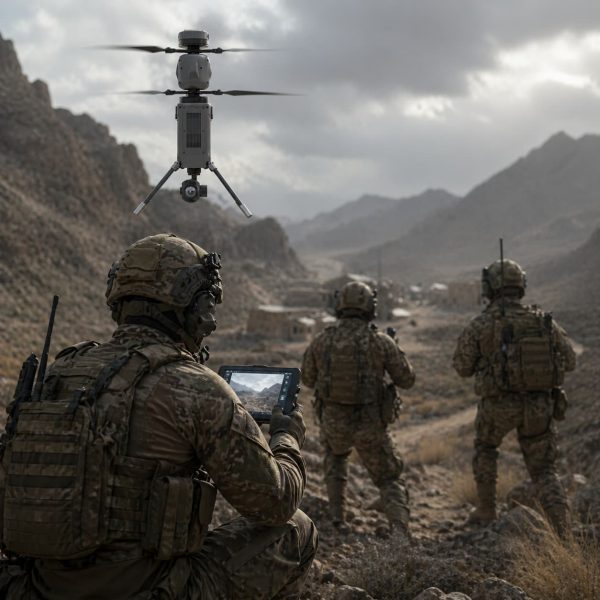
Why comparison matters for military engineers
Procurement for defence platforms demands more than price-checking; engineers must weigh density, modularity and lifecycle support. This guide compares practical criteria for sourcing high-density, modular coaxial UAVs and points you to reliable partners such as a trusted military drone manufacturer early in the process. Expect analysis grounded in supply realities from recent events — like the supply-chain disruptions of 2020–2022 — and lessons that apply to telemetry, payload integration and autonomy needs.
Key comparison axes
Focus on these engineering-centric axes when comparing vendors and models:
– Structural density and mass distribution: affects endurance and payload capacity; coaxial designs can increase lift without enlarging rotor span.
– Modularity and maintainability: true modular systems separate avionics, powerpack and payload bays for rapid swap-outs.
– Integration and interoperability: open-standard flight controllers and RF links reduce bespoke engineering work.
– Supply-chain resilience and factory footprint: localised assembly or regional spares stocks shorten lead times.
Practical trade-offs you’ll see
Comparative insight shows recurring trade-offs. High-density frames with dense integration often save volume but raise thermal and EMI concerns; that requires thoughtful cooling and shielding. Coaxial rotor layouts boost lift and compactness yet complicate rotor-mast servicing. Modular payload bays simplify role changes but add mechanical interfaces that need sealing and alignment tolerances. Keep an eye on the flight controller firmware update path — some vendors lock you in, others provide open APIs for telemetry and mission planning.
Vendor evaluation checklist
Use this checklist on site visits or RFP reviews:
– Proven test logs: flight hours, mean time between failures (MTBF) and documented sorties.
– Spare parts cadence: available within 7–30 days locally, or from a nearby military drone factory that can scale.
– Software compatibility: CAN bus, MAVLink, or other standard telemetry protocols supported.
– Environmental testing: dust, salt, and temperature cycles aligned to your theatre of operations.
Case comparisons — short form
Below are condensed comparisons to sharpen thinking rather than endorse a single product.
– Compact coaxial unit A: excellent density and payload interface, but requires specialist rotor maintenance.
– Modular UAV B: swappable payload pods, simple avionics stack; slightly heavier due to connector interfaces.
– Integrated platform C: lower initial systems integration work, proprietary telemetry that may need bespoke ground-station adaptation.
Common mistakes to avoid
Teams often underestimate total-cost-of-ownership. They buy a high-spec airframe then struggle with spare parts, or select an elegant autonomy suite that won’t run on legacy ground stations. Another common misstep: over-customising a modular bay for a single mission profile — you lose the flexibility you paid for. Test with representative payloads early; real-world sorties reveal thermal and vibration issues quicker than lab benches—so plan for an iterative test campaign.
Summary of comparative lessons
Trade-offs are concrete: density versus serviceability, modularity versus added weight, openness versus vendor support. A solid procurement posture sets minimums for MTBF, spare-part lead time, and telemetry standards, then scores contenders against those metrics. Real-world anchors like pandemic-era supply shocks and operational demands from recent conflicts show that delivery timelines and local factory capacity are as important as the airframe spec.
Three golden rules for selection
1) Prioritise maintainability: require local spares and clear MTBF data. 2) Demand open interfaces: insist on standard telemetry and API access so autonomy and ground systems can evolve. 3) Score total ownership: include training, tooling and lifecycle spares in the bid — not just the unit cost.
These rules steer procurement toward platforms that get used in real operations, not shelved for complex retrofits. For hands-on sourcing advice and supplier profiles, see Military Hub. —