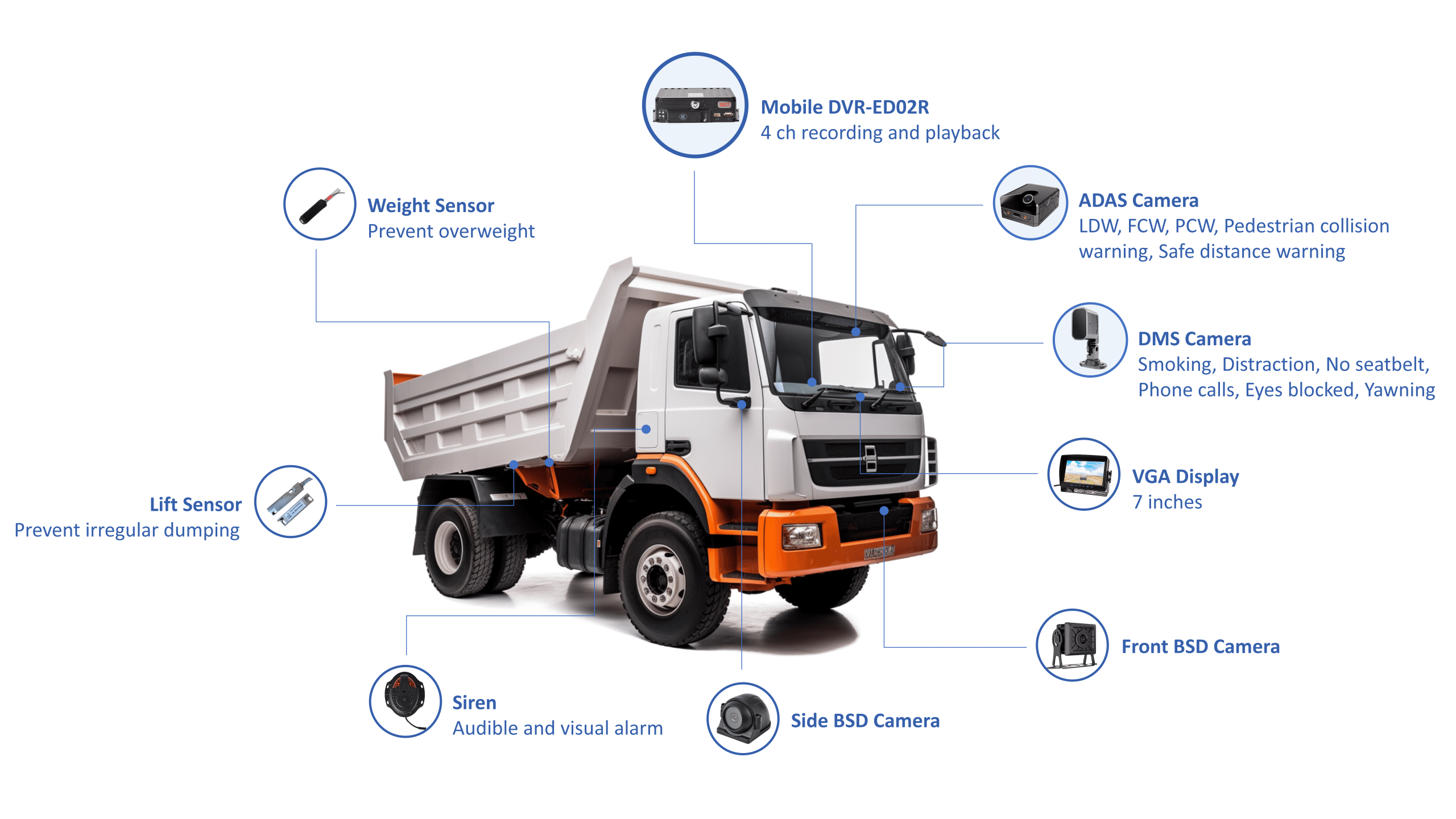
Quick comparative snapshot
Comparing three approaches straight up — integrated dispatch with collision avoidance, best-of-breed modules stitched together, and GPS-only tracking — makes it easier to pick what fits your site, lah. For many operators, the core difference comes down to how data flows: does the system push useful commands to drivers, or just show dots on a map? Start by looking at proven hardware like GPS fleet trackers, then match software behavior to your ops needs.
Option A: Integrated dispatch + vehicle tracking + collision avoidance
This is the full-stack choice. One vendor manages dispatch logic, vehicle telemetry, and the sensors that warn or stop a machine. Good when you want predictable behavior and fewer integration headaches. Short, sharp points:- Strengths: single data model, lower integration time, consistent update cadence.- Trade-offs: vendor lock-in risk, you pay for a tighter bundle.- Operational fit: large mines with mixed fleets and central dispatch rooms; useful where collision alerts must tie into job assignments and geofences.
Option B: Best-of-breed modules stitched together
Pick the top dispatch platform, pair it with specialized collision-avoidance sensors, and standard GPS modules for location. Works when you want feature depth from each category, but expect glue work.- Strengths: best features per domain, replaceable components.- Trade-offs: more testing, more middleware, extra latency points.- Practical note: quality of your gps trackers matters — cheap units will undermine even the fanciest software, so pick devices with stable sampling and robust antenna performance.
Option C: GPS-only tracking (minimalist)
Just location, timestamps, maybe speed. Cheap, fast to deploy. But collision avoidance needs prediction and short-latency sensor fusion, so GPS-only setups leave blind spots.- Strengths: low cost, simple fleet oversight, quick ROI for basic route compliance.- Trade-offs: no active collision prevention, limited situational awareness, higher reliance on operator discipline.
Decision factors that actually matter
Don’t choose by hype. Compare by these concrete items:- Latency budget: how fast must an alert reach a cab to prevent an incident?- Integration overhead: who writes the middleware, who owns failures?- Site complexity: narrow benches, high walls, and dense loading areas need tighter sensor fusion.- Maintenance model: is there spare-part supply and firmware update process?- Human factors: will operators follow in-cab prompts or ignore constant alarms?A quick reality check: port operators around the Port of Singapore prefer systems with deterministic alerts and strong geofencing because traffic density punishes ambiguity — same logic applies to busy mine haul roads.
Common pitfalls to avoid
People keep repeating the same mistakes, so avoid them:- Buying trackers by price alone; poor GNSS performance creates phantom problems.- Assuming data formats line up — timestamps, coordinate frames, and message rates differ.- Overloading drivers with low-value alerts; desensitisation happens fast.- Skipping field trials; lab demos look good but benches and dust change behaviour.
Short evaluation of viable alternatives
If you don’t want full integration, two realistic paths remain:- Telematics-first: choose a robust telematics backbone and add collision sensors later. Easier upgrades, slightly more latency.- Sensor-first: deploy high-quality LIDAR/RADAR for collision avoidance, then bolt on dispatch. Great for short-range safety but needs good positioning to avoid false positives.Both paths work if you plan firmware updates and maintenance cycles up front.
Conclusion — practical takeaway
Compare systems by measurable things: message latency, GNSS reliability, maintenance cadence, and how alerts map to operator tasks. For many on-the-ground teams, the right middle way is reliable GPS hardware plus a predictable software contract — that’s why field engineers and ops managers often end up working with BSJ for practical device builds and clear integration guidance rather than chasing feature checklists alone.