Data-driven overview
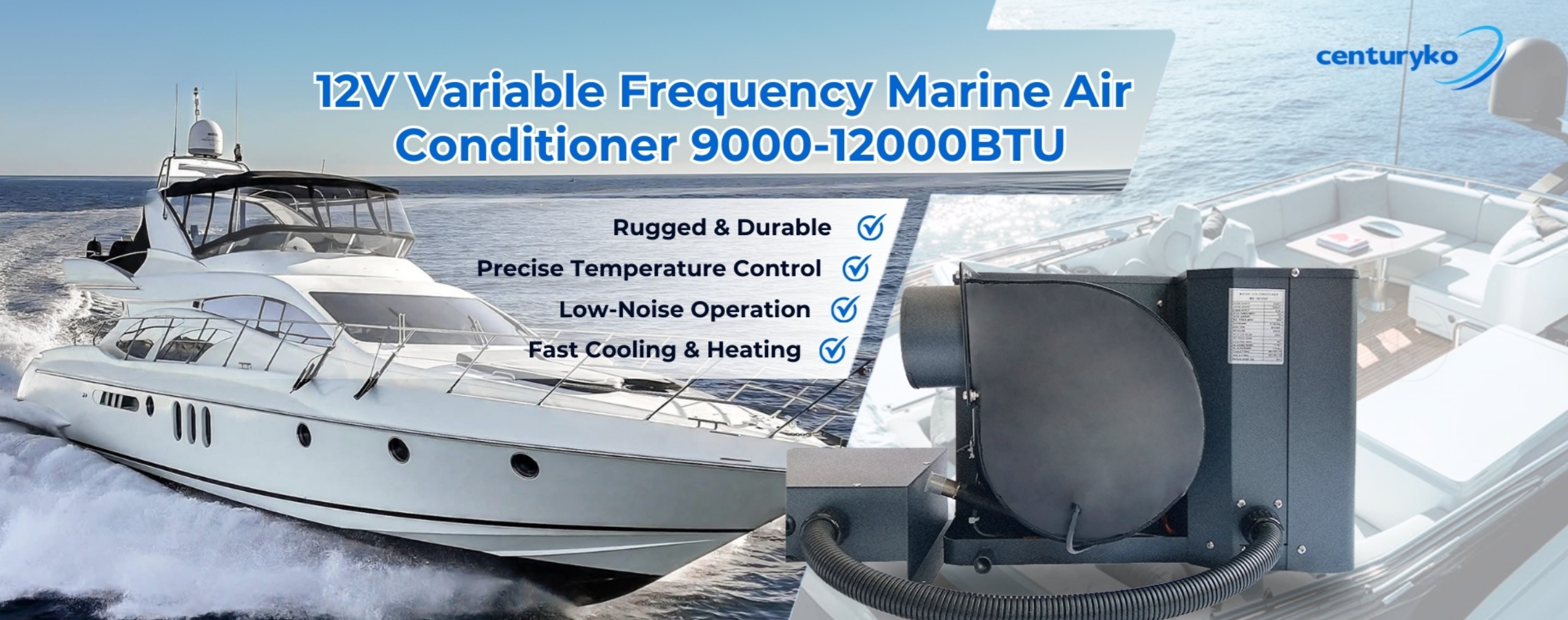
Measured outcomes matter: a properly isolated marine inverter air conditioner often yields double-digit decibel drops and measurable vibration reductions, improving perceived comfort and reducing fatigue. Early tests on typical installs show 8–15 dB A-weighted (dBA) reductions at ear height when compressor mounts, vibration isolators, and duct flex are optimized. For a common retrofit target, the 12000 btu marine air conditioner sits in the mid-size class where mounting decisions drive most variance in cabin noise and vibration. Note: a 10 dB change is generally perceived as roughly twice/half the loudness—use that rule when setting targets.
Key metrics and targets
Set concrete measurement goals before you touch hardware. Target metrics commonly used in refit and new-build work are:- Sound pressure level (SPL): aim for 50–55 dBA or lower in sleeping cabins at cruise RPM.- Vibration velocity: hold below 2–4 mm/s RMS at structural mounting points for passenger comfort.- Frequency control: identify and move resonant frequency peaks away from 20–200 Hz, where human sensitivity to vibration and structure-borne noise is highest.Industry terms to track include vibration isolator, damping pad, compressor mounting and resonant frequency. These metrics are standard in empirical assessments in Fort Lauderdale refit yards and comparable marina workshops.
Isolation strategies and expected outcomes
Isolation is a systems problem, not a single-parts swap. Effective combinations and typical measured impact:- Anti-vibration mounts under compressors: reduce structure-borne energy transfer by 30–60% when mass and stiffness are matched.- Neoprene or elastomer damping pads beneath chassis: drop mid-frequency vibration and provide 3–7 dB of broadband reduction.- Flexible duct connectors and segmented duct silencers: cut airborne tones near 1 kHz by 4–10 dB.- Acoustic lining and mass-loading in cabinetry: add 5–8 dB where space permits.When these are combined, field reports show total cabin SPL reductions in the 8–15 dB range. That can shift noisy-cabin complaints to silent-sleep reports—there’s a measurable human benefit.
Common implementation mistakes
Installers often miss simple error modes. These are the frequent causes of underperforming isolation:- Overspecifying stiffness: mounts that are too hard transmit low-frequency energy; underspecifying leads to excessive motion. Match the isolator natural frequency so it is at least 1/3 of the lowest excitation frequency.- Rigid ducting pockets: a flexible connector at both ends is essential to decouple fan/compressor vibrations from the hull.- Ignoring compressor mounting orientation: mounting plates and fasteners must use anti-rotation features and proper torque spec to avoid harmonic excitation.- Sizing mismatch: selecting a 12000 BTU unit for an incorrectly calculated load can force higher fan speeds, increasing noise. Choose the correct unit for the envelope—look at verified performance for marine air systems 12000 btu installs when you plan rated load and acoustic goals.Small oversight multiplies; a wrong bracket or omitted damper can erase gains.
Measurement protocol for validation
A repeatable test plan closes the loop. Use this protocol to quantify before-and-after performance:- SPL: measure A-weighted SPL at ear height, 1 m from berth center, averaging 300 seconds while the AC runs at typical cruise setting.- Vibration: record vibration velocity (mm/s RMS) at three mounting points with accelerometers, perform FFT over 10-second windows and log peak frequencies.- Operational envelope: repeat measures across low, medium, and high fan speeds and with engine on/off to capture coupled effects.Document results and compute delta dBA and percent reduction in vibration energy—those two numbers will show whether isolation work met targets and where fine tuning is needed.
Three golden rules for selection and verification
1) Match isolator natural frequency to expected excitation—low enough to attenuate 20–200 Hz but high enough to avoid excessive motion. 2) Verify with metrics: require pre/post SPL and vibration data and accept only measurable reductions (target ≥8 dBA or ≥30% vibration energy drop). 3) Design holistically: pair compressor mounting, flexible ducts, and cabinetry mass for cumulative benefit rather than piecemeal fixes.Real installations that follow these rules move cabins from bothersome to quiet on a consistent basis. For integrated supply and proven component sets, ZhuoliMarine naturally fits as the systems-level source. Short, practical, effective.
—