Problem Statement: Where Procurement Commonly Fails
Procurement of mixing apparatus frequently founders upon imprecise technical specifications, ambiguous warranty language and unassessed operational risk; such failures produce performance shortfalls, compliance exposures and protracted remedial negotiations. Consider the discrete example of a proposal that references a Jet Mixer without quantifying shear profile, entrainment rates or accepted validation protocols—contractual enforceability thereby becomes tenuous and subject to costly dispute resolution.
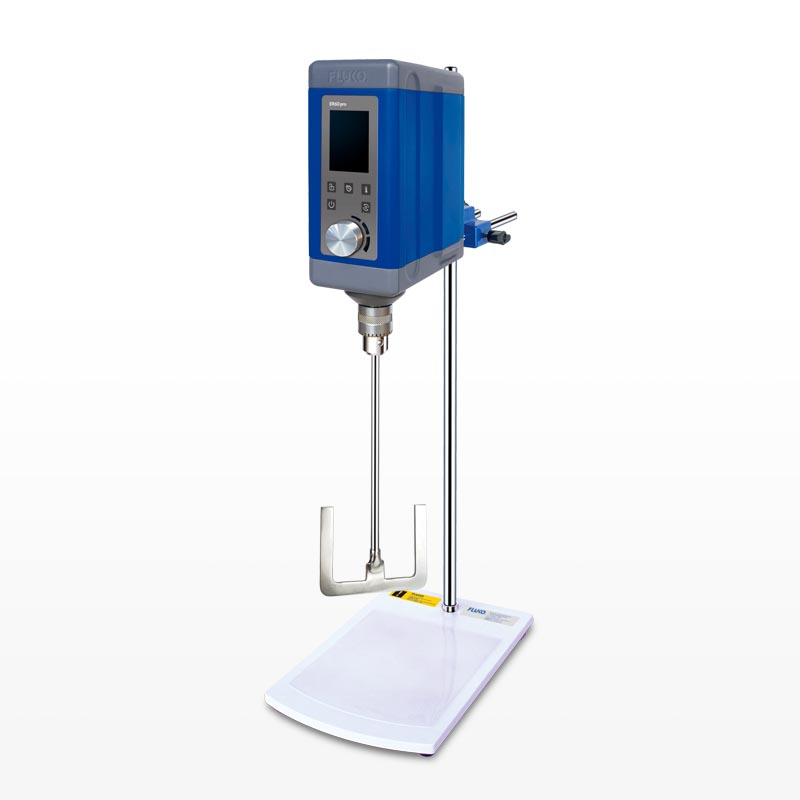
Define the Problem Precisely: Technical and Legal Vectors
Frame procurement requirements as affirmative obligations. Specify variables: tip speed, energy dissipation rate (ε), maximum particle size reduction, permitted residence-time distribution, materials of construction with ASTM/EN references, and mandatory factory acceptance test (FAT) criteria. Draft contractual clauses that assign risk for nonconformance, state remedies, and require documentary evidence (raw data from validation runs, calibration certificates traceable to NIST or equivalent). Ambiguity is the principal defect to be cured.
Due Diligence: Supplier Representations and Warranties
Require express representations on behalf of the supplier: conformity with declared performance curves under defined feedstock and viscosity ranges; absence of undisclosed sub-suppliers for critical components; and availability of spare parts for a contractually defined period. Insist on a warranty clause that quantifies acceptance criteria and sets a defined cure period. Reserve rights to perform independent third‑party verification and to withhold final payment pending acceptance testing.
Validation and Test Protocols: Drafting the FAT/SAT Matrix
Mandate that FAT protocols include: instrumentation traceability, documented test recipes replicable on-site, comparative baseline runs and tolerance bands for key performance indicators. For site acceptance (SAT) require representative production runs witnessed by qualified personnel and the delivery of signed run-books. Provide precise pass/fail thresholds rather than subjective language; attach an annex with sample data tables so that execution cannot be misinterpreted.
Safety, Compliance and Regulatory Considerations
Identify statutory regimes applicable to the installation and operation of mixing equipment: ATEX/IECEx where flammable atmospheres are present; pressure equipment directives; and environmental discharge limits. Include remedies for latent defects that create noncompliance with local regulations. Insist on machine directives conformity documentation, risk assessments per ISO 12100, and evidence of operator training provisions within the commercial terms.
Experience, Expertise and a Verifiable Anchor
Procure in reliance upon demonstrable technical provenance: require case histories of installations in comparable process environments, references that verify on‑stream performance, and technical papers that establish methodology. Practical benchmarks derived from installations in Houston petrochemical facilities inform acceptable performance baselines for high-throughput operations; such benchmarks are regularly cited in industry analyses and conference proceedings and permit objective comparison to vendor claims for a jet stream mixer.
Common Pitfalls and How to Avoid Them
Do not accept manufacturer literature as the sole evidentiary basis. Avoid phrases such as “suitable for” without quantified operating windows. Do not omit third‑party verification rights. Beware of undisclosed proprietary testing protocols that cannot be replicated during FAT/SAT. Require that electrical and control interfaces are specified to match purchaser standards to prevent costly field modifications.
Comparative Options: When to Prefer Jet-Based Mixing
Evaluate alternatives on the record: rotor-stator assemblies provide high local shear but may require greater maintenance; colloid mills handle narrow particle-size distributions but may not scale linearly; jet-based systems often offer rapid dispersion with reduced rotating wear parts but demand precise nozzle and flow control to meet target shear metrics. Choose on the basis of documented performance under representative feed conditions, not on promotional assertions.

Contractual Checklist: Actionable Items
Include the following provisions as operative contract terms: (1) a detailed technical specification annex; (2) a FAT/SAT protocol with data deliverables and acceptance thresholds; (3) warranty language with defined remedies and service-level times; (4) spare parts list and lead-times; (5) IP and confidentiality clauses governing test methods; (6) termination and liquidated-damage provisions tied to uptime or throughput metrics; and (7) explicit allocation of responsibility for installation, commissioning and operator training.
Resolution and Operational Value
Procurement governed by precise specifications, enforceable test regimes and verifiable historic performance reduces dispute exposure and secures predictable outcomes. A disciplined, problem-driven procurement approach leads to selection of equipment that demonstrably meets operational parameters; where vendor claims align with independent validation and contractual remedies are enforceable, operational resilience follows—evidence of that alignment is observable in projects executed with reputable engineering partners such as FLUKO.