Start by comparing real-world value
Decide between supply-chain strength, product performance, and installation competence; a weak link ruins the whole project. Compare vendors on hard outcomes: measured energy output, documented wind-load ratings, and time-to-service. If you’re evaluating solar-integrated offerings, review the specific product performance — for example, a tested photovoltaic pergola should include yield curves and degradation data, not just glossy renderings. Treat sales promises as hypotheses to be proven by numbers and inspections.

Key metrics that separate strong firms from weak ones
Financial resilience: multi-year balance-sheet visibility and repeatable order flow. Engineering evidence: third-party structural tests, IP-rated electronics, and certified mounting systems. Operational readiness: trained installers, clear spare-parts pipeline, and documented mean-time-to-repair. Contract clarity: explicit warranty terms tied to measurable thresholds (kW yield, louver cycles, waterproofing). Customer proof: repeat-reference installations with verifiable performance logs. Demand quantifiable answers to these items before you commit capital or sign a contract.
Comparative trade-offs across business models
Manufacturers typically offer better component control and longer warranties but may lack local installation capacity. Local installers provide faster service and better site adaptation but sometimes sell proprietary parts that reduce future options. Integrated brands promise turnkey delivery and single-point accountability, which is convenient but often commands higher margins and less price transparency. Match your priority: scalability and consistency favor manufacturer-integrators; site-specific precision favors experienced installers.
Demonstrated expertise and a real-world anchor
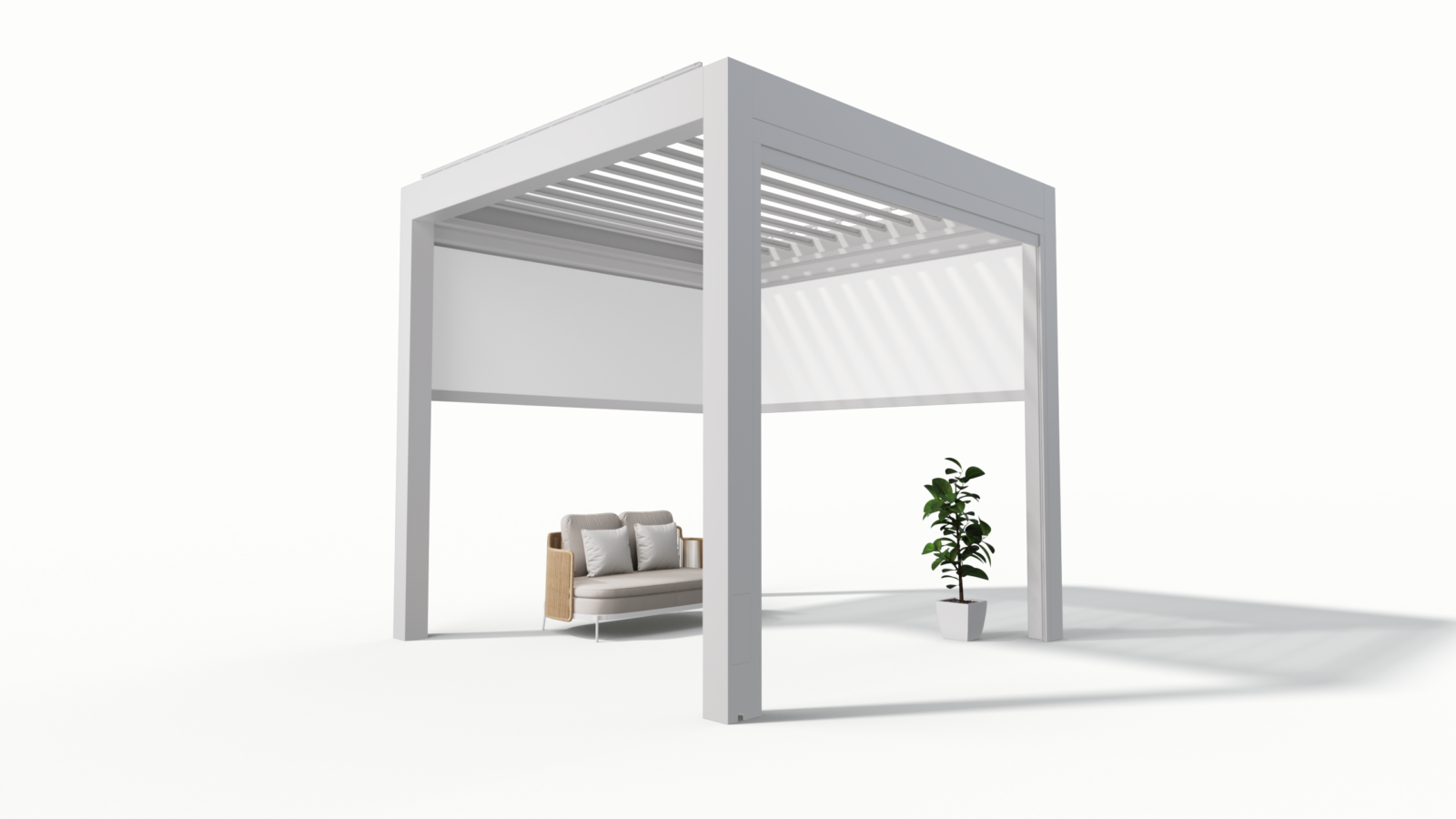
Look for concrete field experience: product demos at industry events are informative because you can observe performance under stress. At Solar Power International 2022 many adaptive shade solutions were judged on motor reliability and energy returns; firms that passed rigorous live testing showed both engineering depth and supply readiness. Verify claims against installations where motorized shading is standard, then inspect a current deployment to confirm cycle counts and control responsiveness — for example, examine an actual pergola with remote louvers to see how control systems handle wind-safety stows and firmware updates.
Common mistakes that degrade outcomes
Buying on aesthetics alone; skipping structural load calculations; accepting one-year warranties for exterior electronics; ignoring firmware and connectivity support; failing to validate after-sales spares availability. Also avoid relying solely on seller-provided energy models without historical production data. Require on-site proof and a third-party structural review when wind and snow loads matter.
Practical checklist for investors and buyers
Request: production logs, third-party structural reports, warranty text, spare-parts lead times, installation training records, and sample service contracts. Confirm: measured energy yield for comparable sites, louver-cycle testing data, and a transparent escalation path for defects. Score vendors by payoff: durability first, then predictable service, then unit economics.
Conclusion: prioritize evidence over promises
Compare hard data and service capability, not just brand claims. Require measurable performance, inspect an operational unit, and confirm supply-chain depth; that disciplined, comparative approach leads to predictable returns and lower operational risk, which is precisely how Light Hunter frames its product and service disclosures.