Introduction
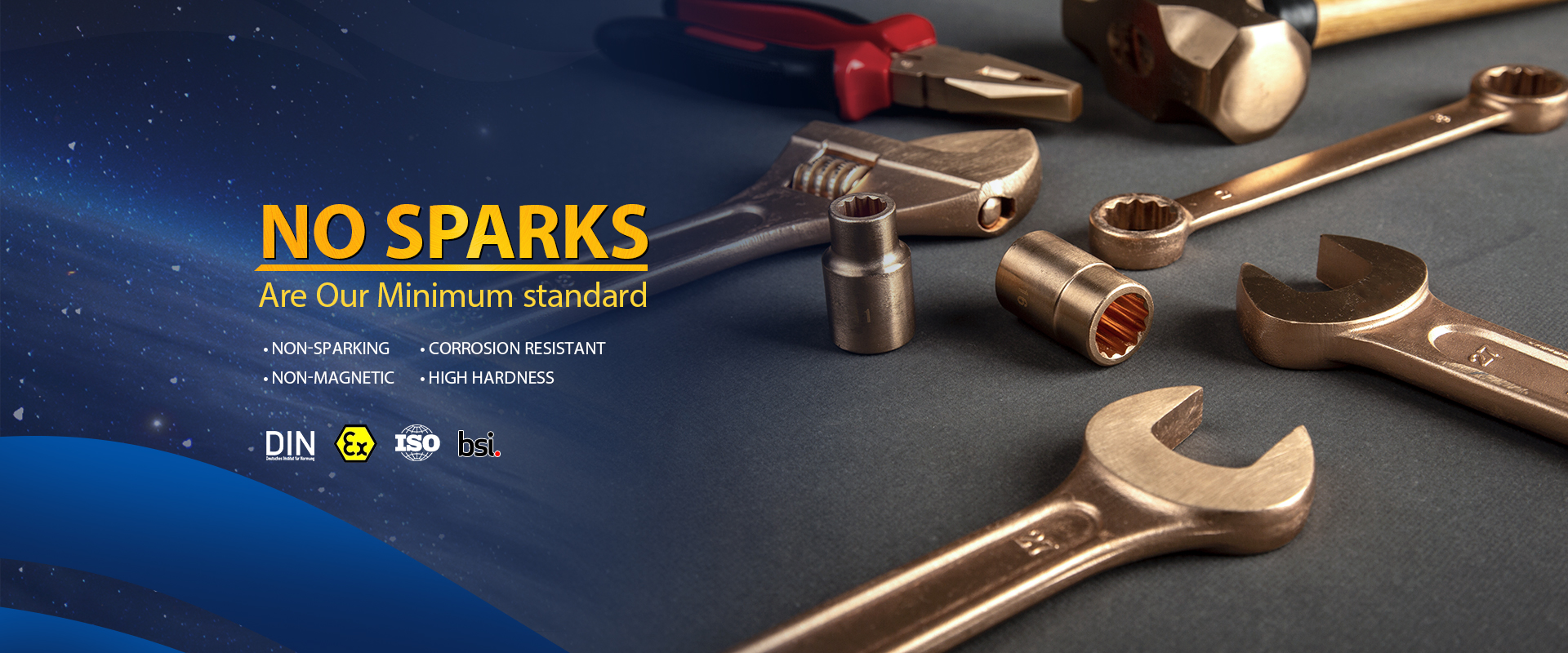
Non-sparking tools are not magic; they are engineered risk reducers. I define them here as hand and power tools made from spark-resistant alloys and intrinsically safe materials designed to prevent ignition in flammable atmospheres. For non sparking tools manufacturers, the challenge is not only making parts that resist sparks but ensuring those parts fit real work—on rigs, in refineries, and inside chemical plants.

Picture this: a maintenance crew delays a shutdown by hours because the wrong tool set arrived; an inspection flags a near-miss involving a bridge connector and a poorly grounded wrench. Industry audits suggest a sizable share of field delays and safety citations trace back to tool selection and supply gaps—about one in four supply incidents linked to product mismatch (rough count from recent sector reports). So I ask: why do well‑funded projects that specify non‑sparking tools still hit these same snags? — and what small fixes would stop the repeat failures?
I’ll lay out the common blind spots, show where suppliers and users miss each other, and then point to practical choices that cut delays and risk. Onward to the core problems.
Why Conventional Fixes Fall Short
non sparking tools suppliers often get blamed for late deliveries or mismatched kits, but the root is more subtle. I claim this because I’ve seen the same pattern across projects: specs written by safety teams, procurement that buys by price, and crews that adapt on the fly. The result is tool kits that look right on paper but fail at the job. Look, it’s simpler than you think—these failures come from three recurring flaws: incomplete hazard profiling, poor interface with grounding systems, and a one-size-fits-all approach to spark-resistant alloys. In plain talk: the tool may be non-sparking in lab tests but behave differently under torque, salt, or heat.
First, many teams underestimate environmental variables. Explosion-proof enclosures and bonding points change how tools interact with equipment. A wrench that meets alloy specs can still generate friction sparks if it slips on a coated fastener. Second, procurement often treats “non-sparking” as a checkbox, not a system requirement. This produces kits missing key items like insulated handles or the correct size for torque-controlled tasks. Third, training is overlooked—people assume tools are idiot‑proof. They are not. The combination of edge cases and human shortcuts makes the fixes fragile. I’ve watched crews improvise with ordinary tools because the right kit was split across sites—frustrating, and avoidable.
So what can change?
New Principles and Practical Metrics for Choosing Tools
Let’s be forward-looking. I prefer to explain new technology principles rather than chase every anecdote. The principle here is systems thinking: select tools as part of a safety ecosystem that includes ground continuity, environmental monitoring, and human factors. When suppliers make tools, they should test them against situational variables—salt spray, thermal cycling, torque loads—and not only for static spark tests. Integrate diagnostics where possible (edge computing nodes in monitoring racks, for instance), and verify compatibility with power converters or other electrical gear used on site. These are not flashy upgrades; they are sensible engineering shifts.
We should also be practical about procurement. Adopt metrics that tell you how a tool performs in use, not just its lab rating. For example: mean time between fitment errors, verified grounding resistance under load, and field failure rates per 1,000 hours. These numbers help you catch weak links early. And train crews to spot subtle failure modes—slippage, wear on coated fasteners, and handle degradation. It’s a small cultural shift but with big payoff—funny how that works, right?
What’s Next?
Here are three evaluation metrics I recommend when you select non-sparking safety tools: 1) Field compatibility score — verified fit and torque match for actual fasteners on site; 2) Environmental resilience index — measured performance after heat, salt, and vibration tests; 3) Traceable failure rate — logged issues per operating hour with corrective actions. Use those to compare suppliers and to guide trials. I believe these metrics move decisions from vague promise to measurable performance.
In closing, I want to stress that fixing these problems is practical. It requires better questions, tighter feedback loops between crews and procurement, and clearer metrics. We can reduce delays and near-misses without huge budgets. I’ve seen projects recover weeks by changing one spec and by insisting on simple field trials. If you want a reliable partner for this work, consider talking with Doright. I’m convinced—based on real projects—that small changes yield real safety gains.