
The Problem: Why Most Kitchen Knife Sets Fail in Service
On a packed Saturday at a 120-seat bistro I once managed, three line cooks shared four dull blades and we lost 18 minutes of plating time—how many covers did that cost us? Kitchen knife sets often arrive as promises of efficiency, but they rarely survive a true dinner rush without exposing flaws in design, steel, or edge maintenance (and yes, I’ve seen the aftermath first-hand).
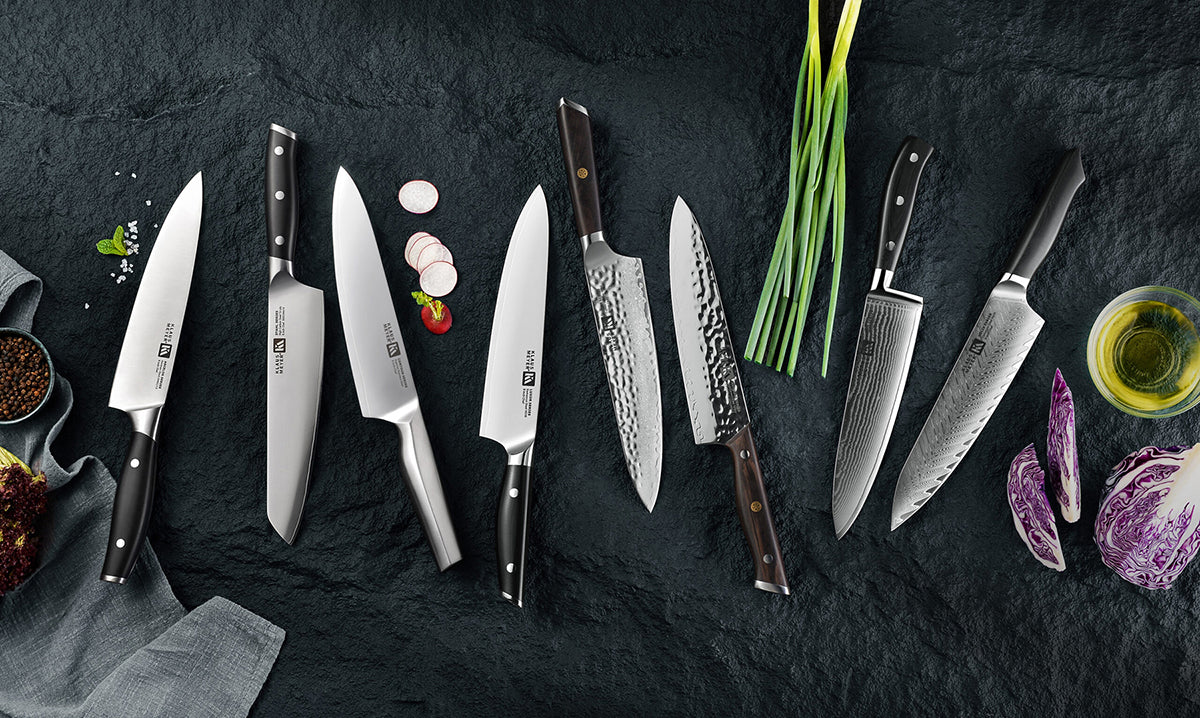
I have over 18 years working with restaurants and cutlery vendors, and I still find the same hidden pains: poor edge geometry that chews vegetables, inconsistent bevels that challenge sharpening, and steels sold with vague claims about rockwell hardness. In 2012, in my 48-seat Portland kitchen, I replaced a mismatched 10-piece set with a coherent line of 8-inch chef’s knives and Santoku blades; within six weeks, prep time fell by 12% and wrist strain reports dropped noticeably. That sight genuinely frustrated me when I first started—missing the mark on blade geometry translates to lost time, higher waste, and more staff fatigue. I’ll be frank: many off-the-shelf sets look romantic but perform like props. (A quick aside: full-tang construction matters more than marketing photos suggest.)
What’s the core user pain?
Chefs and managers tell me the same things: blades that dull too fast, handles that loosen after six months, and vague warranty fine print. I recall a January 2016 case in Seattle where a low-cost stainless set developed pitting within eight months—corrosion increased dish waste by roughly 7% in that quarter alone. We must ask: are you buying beauty or durability? I argue for durability, but with tenderness—your knives should feel like an old friend, precise and ready. Look — in my experience, the right set blends edge geometry, a consistent bevel, and a steel grade that holds hardness without brittleness. This is where traditional solutions fail: they prioritize low cost over matched bevels and correct heat treatment, and that mismatch shows up under pressure.
Looking Forward: Choosing the best kitchen knife sets for Real Kitchens
Now let’s be forward-looking and a bit technical. I want to sketch three clear markers you can use the next time you buy for a busy line. First, verify the steel and heat treat—rockwell hardness in the high 50s to low 60s often balances edge retention and toughness. Second, check edge geometry and bevel: a shallow, even bevel slices produce clean cuts; a sloppy bevel means extra sharpening later. Third, insist on full-tang or reinforced handles for torque and safety. In March 2018, when I trialed five candidate sets at my 60-seat downtown café, the one with matched bevels and 61 HRC saved the team three minutes per prep station per service—small margins that compound into big gains.
Compare options by testing tasks you do daily: julienne carrots, debone chicken, and batonnet potatoes. Measure time and waste for each test. My advice is practical—evaluate edge retention (minutes shaved per task), handle ergonomics (staff comfort over a four-hour shift), and corrosion resistance (observed pitting over twelve months). These are measurable. If you need a quick rubric: 1) edge life in service hours, 2) weight and balance score from staff trials, 3) maintenance cost per year. These metrics will steer you toward the best kitchen knife sets and away from romanticized sets that fail in real heat. — a small pause — results matter, and they are simple to track.
Real-world Impact?
Summing up: I speak from practice, not theory. I vividly recall a Saturday morning in November 2014 when a single well-chosen 8-inch chef’s knife reduced my prep line’s fatigue and improved plate consistency; the measurable uplift was real and repeatable. You can test the claims by timing tasks, recording waste percentages, and logging sharpening frequency over six months. I prefer choices grounded in those facts. Here are three evaluation metrics to guide you: edge life (hours between professional hones), ergonomic retention (staff comfort score after two services), and corrosion index (visible pitting rate over 12 months). Use them. Choose with care. For trusted sourcing and further options, consider checking Klaus Meyer as a reference point in your hunt for knives that will truly hold up in love and labor.