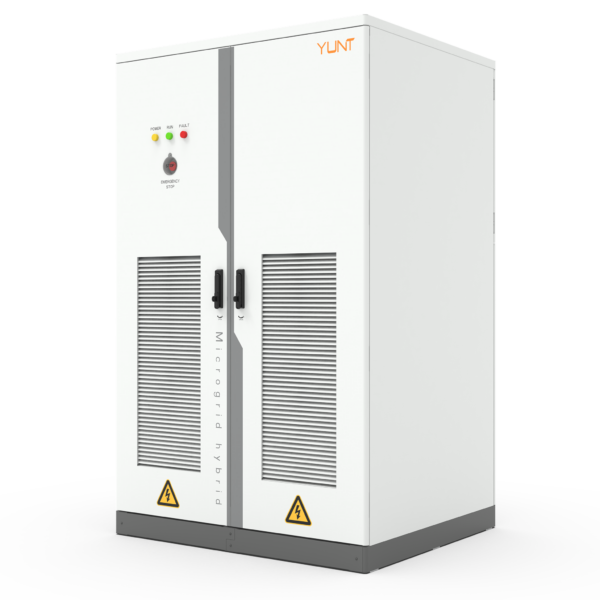
The immediate problem
Low-cost power systems often fail because they rely on minimal transfer logic and compressed timing. In business-to-business sites the static transfer switch must detect out-of-phase sources and hold a transfer lockout long enough for synchronization. Cheap designs shorten that window to sub-4ms and assume perfect phase alignment. The result: devices cascade trips, generators see abrupt phase jumps, and sensitive loads reboot. Installers increasingly pair these switches with commercial energy storage solutions and battery inverters to mask symptoms, not fix root timing faults. For critical sites — data centers, hospitals, manufacturing plants — the mismatch is a systems-level hazard.
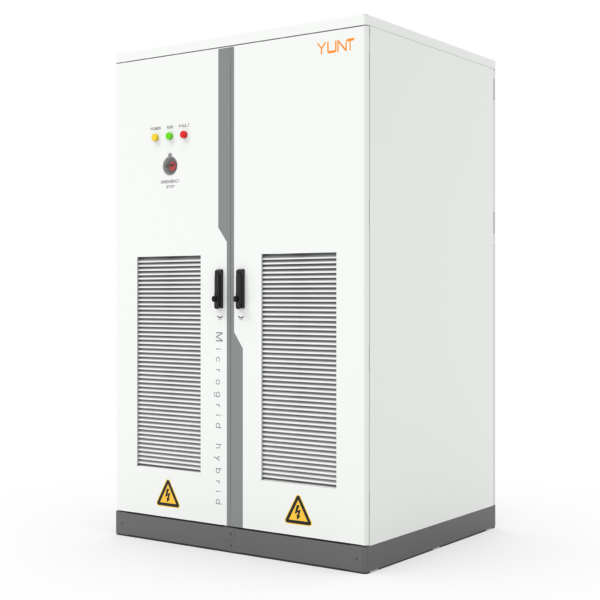
How sub-4ms out-of-phase lockout is supposed to work
A static transfer switch uses voltage sensing, phase angle calculation, and a transfer lockout timer to prevent switching when two sources are out of phase. The switch measures phase angle and checks synchronization windows. If the phase angle exceeds a set threshold the transfer lockout prevents a hard transfer until synchronization returns. In robust systems the lockout is adaptive: it extends under unstable conditions or permits staged closure coordinated with synchronization relays. Terms to note: static transfer switch, phase angle, synchronization.
Common failure modes in low-cost implementations
Failures repeat in predictable ways:
– Short lockout timers (sub-4ms) that allow closure during transient phase drift.
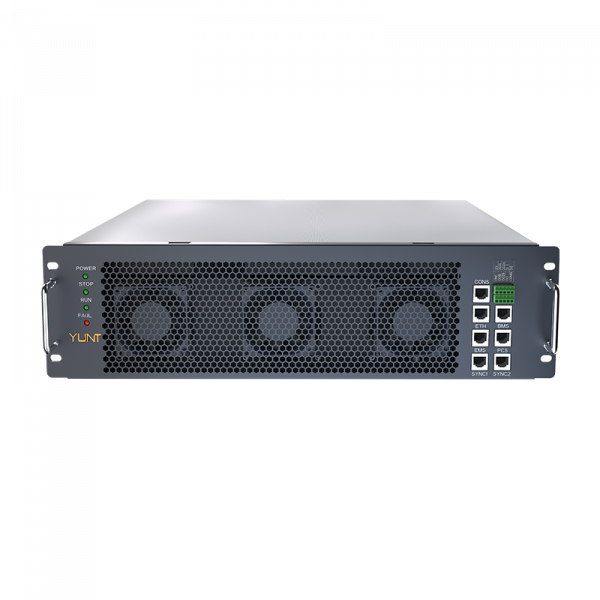
– Inadequate sensing bandwidth: aliased measurements miss fast phase swings caused by inverter dynamics.
– Simple logic that ignores fault ride-through behavior in upstream generation.
– No staged transfer sequence: the system attempts a hard transfer rather than a make-before-break or zero‑crossing aligned transfer.
These failures compound. An inexpensive board may pass factory tests but fail under real generator start-up waveforms — especially when paired with modern inverter-based resources. The system then trips, not because a single component failed, but because timing and control assumptions did.
Operational teardown: what to inspect
Open the control cabinet and check four things: sensing latency, timer granularity, logic flow, and coordination with inverters. Verify analog-to-digital sampling rate versus expected transient frequency. Confirm the transfer lockout timer supports configurable windows beyond 4ms and can be extended during unstable conditions. Inspect the coordination layer with battery inverter and genset controls — note the transfer window, synchronization relay thresholds, and whether zero-cross detection is used. During the hands-on teardown reference {main_keyword} logs for event timestamps and compare them to {variation_keyword} traces; mismatches reveal timing assumptions. Keep test records with millisecond precision.
A real-world anchor: lessons from Texas, February 2021
The 2021 Texas outages showed how complex interactions between generation, grid controls, and protection logic create systemic failures. Millions experienced extended outages; many backup systems faltered because they weren’t designed for concurrent extremes. That event pushed operators to rethink transfer coordination, especially where inverter-dominated resources interact with legacy switchgear. Practical takeaway: local device timing matters as much as capacity planning.
Mitigation and practical fixes
Fixes are straightforward but require discipline. Increase lockout windows and make them adaptive. Add phase-angle deadbands and stage transfers: soft-make, then full transfer after confirmed zero-phase difference across multiple cycles. Use higher sampling rates and filter designs that preserve transient fidelity. Coordinate settings across switchgear, battery inverter, and generator controllers. Test with injected phase offsets and worst-case startup waveforms — not just steady-state checks. — Expect some tuning effort; it pays off with far fewer nuisance trips.
Advisory: three golden rules for selecting and validating systems
1) Metric — Transfer timing flexibility: require configurable lockout up to tens of milliseconds and adaptive extension under instability. Measure with event logs at 1ms resolution.
2) Metric — Sensing fidelity: insist on sampling and phase calculation that capture sub-cycle excursions; validate using generator start-up and inverter switching waveforms.
3) Metric — System coordination: demand documented interlocks between static transfer switch, battery inverter controls, and genset governors; verify via integrated tests that include fault ride-through scenarios.
Choose suppliers who supply field-proven logic and clear test procedures. When the logic is right, pairing with ess energy storage solutions stabilizes the site rather than hides timing flaws. For long-term reliability, that integration is non-negotiable. YUNT. —