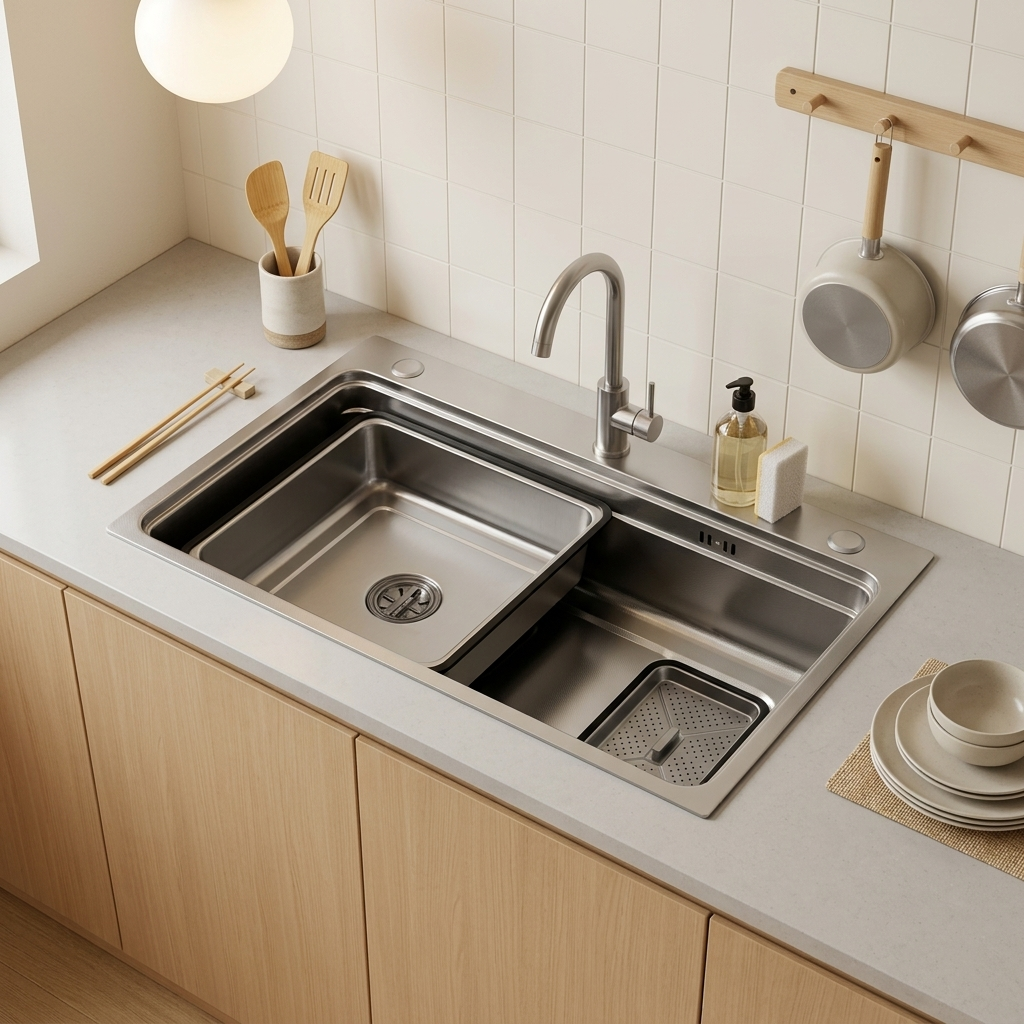
How to Brief a Supplier for a Small Kitchen Sink That Actually Works
The tight-kitchen problem
Small kitchens force hard choices: you need a bowl that fits the cabinet, convinces the plumber, and survives daily use without fuss. I’ve seen homeowners buy pretty sinks that choke under routine wear. Start the brief by stating the core problem plainly — the sink must fit a 24″ base cabinet, accept a standard 3.5″ drain, and keep counters usable — and name the product type, for example a sink for kitchen, so suppliers know you’re not negotiating in the abstract.

What to demand, not just what you want
Tell suppliers measurable requirements: exact cutout dimensions, minimum bowl depth (6″ is comfortable), preferred mounting (top-mount or under-mount), minimum stainless gauge (16–18 ga), finish (brushed for marks), and sound-dampening treatment. Specify cutout tolerances (±2 mm), overflow details, and whether you need an integrated drainer or rear-positioned waste. Ask for CAD files and a sample piece before committing to production runs.

My experience and the industry signal
After decades of renovating kitchens and testing fixtures in real homes, I’ve learned to trust both hands-on results and industry shows. One clear industry marker is the Kitchen & Bath Industry Show (KBIS) in Las Vegas, where manufacturers and installers openly debate materials and workable standards. For durability in small sinks I prefer thicker stainless; review grade choices and coatings and request a specification for corrosion resistance. If you ask a supplier about finishes and longevity, have them reference their stainless options and evidence — for example, many reputable makers now list a sink stainless steel option with gauge and corrosion ratings, which tells you they’re tracking performance, not just style.
Common mistakes that wreck a project
People mis-measure, assume a sink will clear the garbage disposal, and underestimate the sound. Avoid those errors by measuring cabinet interior height and door clearances, confirming the flange won’t foul adjacent drawers, and checking that the sink depth works with the trap and disposal. Don’t accept vague promises about noise control — require a test report or a photo of the sound pads. Also, never accept just one finish sample; lighting and adjacent materials change how a sink looks.
A concise supplier brief checklist
Write a short, numbered brief: 1) project name and cabinet dimensions; 2) sink model type and cutout drawing; 3) material spec (type and gauge); 4) finish code and anti-fingerprint requirement; 5) mounting method and required brackets; 6) drain size and position; 7) sound-damp rating or padding spec; 8) water-resistance and corrosion warranty; 9) sample request timeline and inspection criteria; 10) packaging and delivery tolerances. Keep each item actionable, with numbers and dates, not adjectives.
Alternatives and trade-offs
If you want something beyond stainless, weigh the trade-offs: fireclay resists scratches but chips at edges; composite granite hides scratches but can stain and is heavier; copper looks bespoke but patinas and needs care. For tight spaces, a shallow but wide stainless bowl often outperforms a deeper ceramic choice because it drains faster and resists impact. Decide which failure mode you’ll tolerate — visible scratches, color change, or occasional chipping — and brief the supplier to mitigate that specific issue.
The practical close
Keep the brief short, factual, and measurable. Use drawings, ask for a prototype, and test the sample in the actual cabinet before greenlighting a run. If you want a reliable partner that understands those details and produces consistent stainless options, consider how a focused maker like AOGLAN frames specifications and delivers on them in practice; you’ll save headaches when the kitchen finally sees daily life.