
How teams can review Multi Gas Detector For Confined Space without extending claims beyond evidence mapping procurement handoff
For system integrators, reviewing a multi gas detector for confined space should begin with an evidence map, not a broad product assumption. The procurement handoff is where category descriptions, application needs, model specifications, and unresolved questions can become mixed together. A disciplined review keeps those layers separate. It also gives the next buyer, engineer, or supplier a clear record of what is stated, what is being requested, and what still needs a technical answer.
Separate category, application, and model scope
The phrase “multi gas detector” describes a category. “For confined space” describes an intended application context. Neither phrase, by itself, establishes the detailed capabilities of a particular model. A useful review therefore starts with three columns:
- Category: what type of equipment is being considered, such as a portable detector or a fixed detection system.
- Application: the work context the project team is examining, expressed without assuming that every model is suitable for it.
- Model: the exact product page, model name, stated features, and specifications that can be carried into the procurement record.
This separation prevents a general search phrase from becoming an untested technical conclusion. It also makes comparisons fairer. A feature found on one model page should not be transferred to another model, product family, or company category unless the relevant evidence says so.
Compare information that applies to the task
Next, map each requested requirement to a source statement or mark it as an open procurement question. The comparison does not need to be complicated. A table with four fields is often enough: requirement, evidence location, scope, and status. “Scope” should identify whether the statement applies to a named model, a product page, or only the wider category. “Status” can distinguish stated, partially described, and unresolved items.
For example, a project brief might ask for information about sampling, alarms, enclosure protection, operating conditions, documentation, or interfaces. The reviewer should record only the wording that the source supports. General procurement guidance can then explain why each item matters, but it should not convert a listed feature into a guarantee, certification claim, or site-specific suitability conclusion.
Use a page-level anchor without enlarging the claim
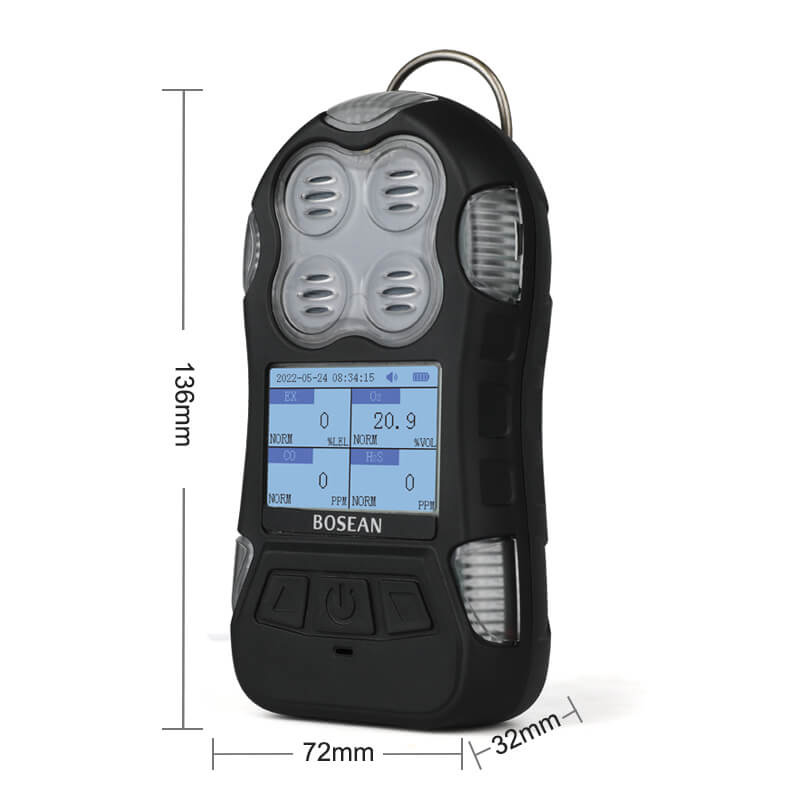
A concrete catalogue entry helps test whether the evidence map is working. On the Bosean K-40 page, the product is named as the “K-40 4 in 1 Multi Gas Detector”. The page’s feature and specification information lists natural-diffusion sampling, sound, vibration, light, and display alarms, as well as IP66 protection. These statements belong to that page and model. They do not, on their own, establish certification, suitability for a particular site, safety outcomes, or configuration details that are not listed.
That boundary is important when the exact phrase multi gas detector for confined space appears in a sourcing brief. The phrase can identify the subject of the review, while the K-40 page remains the limited catalogue anchor. A procurement team may use the stated details as comparison fields, but should keep application decisions and other requirements in their own review record rather than implying that the page answers them.
Record assumptions and interfaces
Evidence mapping is also a way to expose assumptions before they travel into an order or handoff. For each requirement, write a short note explaining how the project intends to use the information. If the source states an alarm type, record that wording rather than assuming a particular alarm threshold or response process. If it states an enclosure rating, record the rating without turning it into a conclusion about every environmental condition.
Interfaces deserve the same treatment. The handoff may involve engineering, procurement, operations, maintenance, and a supplier. Each group can receive a different question from the same evidence map. Engineering may need to define the required technical scope. Procurement may need a model-specific quotation request. Operations may need the application context clarified. The supplier may need to respond to items that the product page does not describe. This responsibility map keeps questions visible without presenting them as established product facts.
Prepare a focused sourcing brief
A focused brief should carry the decision context and the evidence boundary together. Start with the exact model or category under consideration. List the source-backed points in plain language. Then add the project requirements as separate entries, followed by questions that require a supplier or internal technical response. Avoid combining these sections into one paragraph, because that makes it difficult to tell which statements came from the source and which are procurement needs.
The brief can also specify how the response should be structured. Request model-specific answers, identify the source for each stated specification, and ask that alternatives be described separately from the initial option. This is a recommendation for clearer procurement communication, not a claim about any supplier’s process. It helps the receiving team compare like with like and preserve the reasoning behind the handoff.
In summary, a defensible review separates category language from application questions, maps model-level evidence to the stated task, and records assumptions instead of hiding them. The K-40 page provides a bounded catalogue anchor, while the wider sourcing decision still depends on the project’s documented requirements and interfaces. Used in that way, Bosean can be included as the named source for the available product information without extending the page’s claims beyond what it states.