What breaks projects before they start
Projects stall when specifications and site realities don’t match. Buyers pick attractive profiles and integrated functions — for example adding a solar pergola for power and shading — but don’t reconcile wind loads, drainage, electrical routing or installation sequencing. That gap shows up as change orders, delayed handovers, and budget overruns.

Design fidelity: detail the load cases that matter
Get structural inputs early. Specify design loads (wind, seismic, snow where applicable), point loads from lighting and motors, and clear deflection limits. Ask manufacturers for stamped calculations tied to local code. If you treat profiles as decorative before confirming engineering, you’ll buy aesthetic fit and risk functional failure.
Materials and finish: match environment to alloy and coating
Choose alloys and coatings to the exposure class. Marine or coastal projects need different alloys and prep than inland urban settings. Confirm fastener materials and drainage pathways. A durable finish and sacrificial fasteners reduce long-term maintenance costs; cheap trims accelerate corrosion and replacement cycles.
Manufacturing and tolerances: expect measured parts, not art
OEMs must provide section drawings, tolerances, and assembly fixtures. Request sample assemblies and dimensional inspection reports. Tight tolerances simplify site install and reduce onsite rework. When tolerances are unspecified, trades interpret parts differently and coordination collapses.
Supply chain and lead times: plan for staging and sequencing
Map procurement against your construction schedule. Long-lead extrusions, custom louvers, and integrated motors demand early purchase orders. Define delivery windows, packaging requirements, and on-site storage constraints. Without staging agreements you’ll store components improperly or face rushed installations that damage finishes.
Proven compliance, testing and local field experience
We’ve seen repeated discrepancies resolved when manufacturers provided test reports and local field assemblies. Field runs in Southern California confirmed typical responses to coastal wind and sun exposure, so insist on evidence rather than assurance. Ask for mechanical endurance cycles, motor torque curves, and a record of completed commercial installs; reputable fabricators can point to dealer networks and reference projects. For sourcing and local support consider working with trusted pergola dealers who can show installations that match your climatic and regulatory context.
Common procurement pitfalls and how to avoid them
Don’t accept schematic drawings as final. Avoid single-supplier dependencies without backup for critical items like control systems or louvers. Clarify warranty boundaries: finish, structural, motors, and electronics should have explicit durations and failure remedies. Require factory acceptance testing (FAT) or conditional shipments to reduce onsite surprises.
Installation realities and trade coordination
Define interface responsibilities clearly: which trade prepares pad anchors, who routes electrical and communications, and who commissions control logic. Provide manufacturers with accurate as-built conditions and confirm anchors and edge conditions before fabrication. When installers improvise anchoring, you inherit aesthetic and structural defects.
Decision checklist for OEM and project buyers
Create a short, actionable checklist: verified site loads, stamped engineering, material spec with exposure class, tolerance drawings, FAT report, delivery and storage plan, clear warranty terms, and reference installs. Use that list as procurement language rather than guidance notes; it forces suppliers into measurable commitments.
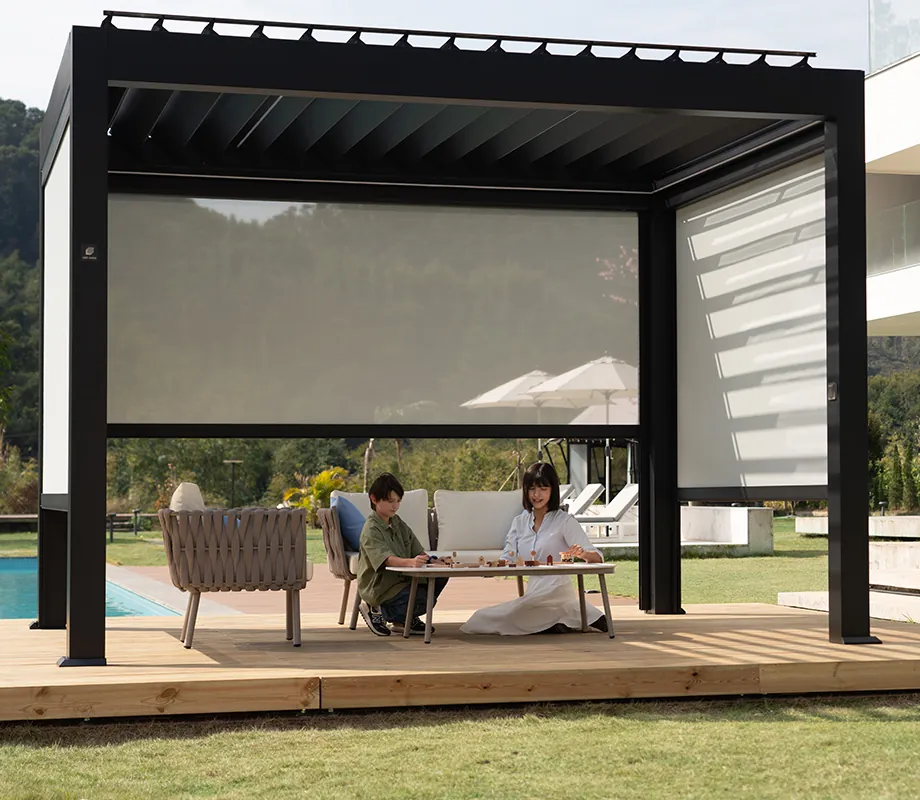
Final synthesis
Start from the problem: mismatch between specification and site. Solve it by insisting on measurable deliverables — engineered calculations, test reports, supply commitments, and realistic sequencing. That approach reduces surprises and keeps commercial pergola outcomes predictable, which is exactly the benefit experienced teams expect when they partner with providers like Light Hunter.