The problem: bonds that fail and sprays that separate
Think of a production line as a busy kitchen: if one ingredient arrives off-spec, the whole dish collapses. Manufacturers face batches that cure too slowly, beads that slump, aerosols that sputter, and adhesives that show variable tack — all symptoms of inconsistent raw materials, poor process control, or a mismatched formulation. A reliable silicone sealant manufacturer treats these issues like mise en place: precise inputs, repeatable technique, and controlled environment.

Diagnosis: where formulations stumble
The root causes are simple and mechanical, not mystical. Contaminated fillers change rheology. Incorrect curing systems create surface skinning or deep tackiness. Propellant-to-solvent ratios in aerosols alter spray pattern and drying, and substrate chemistry kills adhesion if primers aren’t chosen correctly. Fixing the symptom — adding thickeners or increasing load — often hides the problem and ruins long-run consistency.
Recipe corrections: practical fixes that work on the line
Start with tight specifications for silanes, crosslinkers, and rheology modifiers. Control temperature during mixing; emulsions and siloxane oligomers behave like custards — shear and heat change texture. Use staged addition: disperse fillers at low shear, then introduce surfactants and crosslinkers at controlled rates. Match cure system to service environment: alkoxy cure for low-odor interior use, oxime or acetoxy when faster surface cure is required, and neutral cures for metal compatibility. For aerosols, validate propellant pressure and nozzle orifice in a process-run test, not just lab cups.
Alternatives and common pitfalls
If silicone isn’t the right tool, consider polyurethane for abrasion resistance, modified silanes (MS polymers) for paintability, or high-solids acrylics for cost-sensitive sealing. Don’t swap chemistries blind: polyurethane can stick where silicone won’t, but it may yellow and outgas plasticizers. Avoid these mistakes: over-thinning to improve flow, ignoring pot life on two-part systems, and skipping adhesion tests on the actual substrate under service conditions. Short bench checks won’t catch field failures.
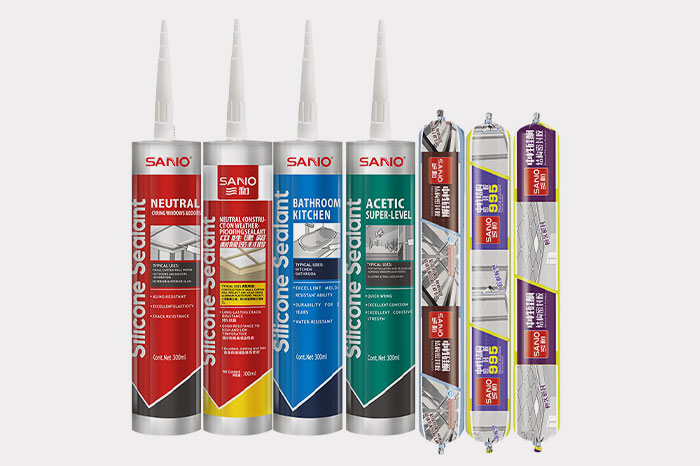
Evidence, standards, and a practical anchor
Experience matters: teams with hands-on formulation bench time and pilot-scale runs catch scale-up problems early. Refer to industry standards like ASTM C920 and ISO 11600 for performance baselines and design tests around tack-free time, elongation, and adhesion retention. Trade benchmarks surface at major industry gatherings; companies demonstrate trends every season at the Canton Fair in Guangzhou, which crystallizes supplier capabilities and market expectations — silicone sealant china resources often surface around those shows. Certify raw-material COAs, run accelerated aging, and document process windows so adjustments remain recipes, not experiments.
What this means for procurement and production
Treat adhesives and aerosols like professional recipes: specify ingredients, control cook time (mixing and cure), and validate every batch against a simple QC panel. When you need consistent seal performance, a supplier that provides formulation guidance, application support, and reproducible material specs becomes an operational partner. That level of craft and support is what you find when formulation discipline meets reliable supply, as practiced by SANVO.